Åre 2017: Team Canada takes gold!

Sveriges Alpina Nationalarenan, Åre – (updated) – Team Canada ended a string of close brushes with the podium with a dramatic win under Screen Shot 2017-03-07 at 1.22.13 PMthe lights on a steep, challenging track that will host the 2019 World Championships. The exciting Nations Team Event, which will be staged for the first time in the 2018 PeyongChang Olympic Winter Games, took centre stage and Team Canada lived up to their growing reputation as tough competitors in dual racing with a solid performance to take the gold medal.

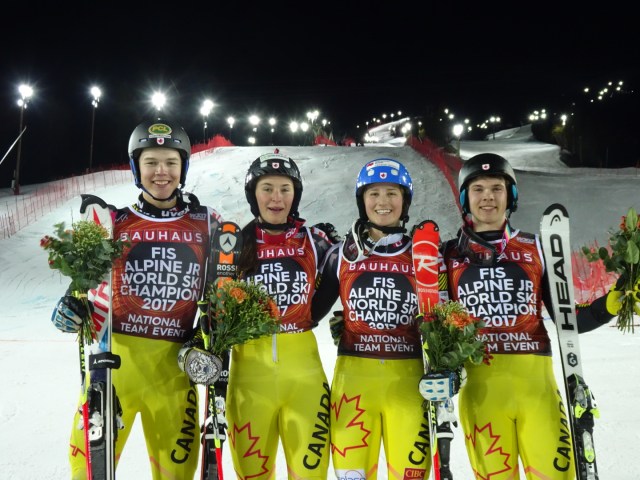
The quartet of athletes selected to represent Canada included Ali Nullmeyer (Georgian Peaks), Stefanie Fleckenstein (Whistler Mt.), Jeffrey Read (Banff Alpine Racers) and Jack Crawford (Whistler Mt.).

Seeded 3rd, based on the Marc Holder Trophy standings (Nation Team standing) from the 2016 championship, Canada faced Poland in the opening round. They moved forward after a 2:2 tie based on time (ties are decided by adding the fastest female and male time from each opposing team) based on the wins of Nullmeyer (Georgian Peaks) and Read (Banff Alpine Racers).

In round two, Canada knocked out the host nation Sweden 3:1 with wins from Nullmeyer, Fleckenstein and Crawford.

Round three Canada won on time differential over Germany after a 2:2 tie, again using times from Nullmeyer and Read. In this round, Read posted the fastest time on blue course for the entire race (17.69). This ensured Canada moved into the Big Final against a powerhouse Austrian Team that has been dominating the 2017 Championship.

In an exciting finale to this fast-paced competition, the Canadian quartet took a quick 2:0 lead with wins by Nullmeyer and Read (who posted the fastest time of the day on the red course of 17.70). Stefanie Fleckenstein (Whistler Mt.) was narrowly beaten, but Jack Crawford posted a resounding win in the final matchup giving gold to Canada with a 3:1 margin to capture the World Junior title.

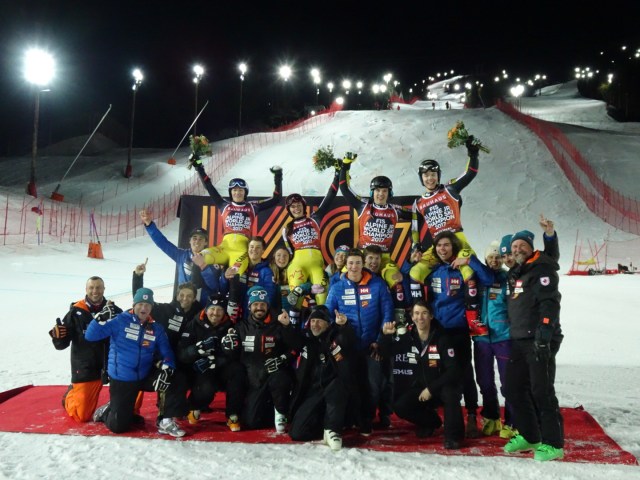
It was a team effort. All members of the Canadian Team at the World Juniors were on-hand to cheer on the participating athletes. The coaching staff, service and support team where on site after a long day following the ladies giant slalom run earlier in the day.

Each athlete on the team made a significant contribution. Nullmeyer raced first in each round and was the steadiest member of the team winning all of her races. Read was blistering fast with his starts and was fastest on both courses, especially when it counted in the semi-final and Championship Round (Grand Final). Fleckenstein demonstrated solid skiing in and won when it counted against the Swedes. Skiing the anchor leg, Crawford pulled off an incredible reaction in round 2 when his competitor from Sweden made a mistake and veered into Jack’s course – he lept over the athlete averting disaster. And in the final round, Crawford ‘sealed the deal’ by winning the final matchup of the Grand Final.

Canada’s gold medal demonstrates continued strength in this new Olympic event. The Canadian Team took bronze in the 2011 World Juniors and the senior team won silver at the 2015 FIS Alpine World Ski Championships in Vail. At the 2017 Worlds, Canada narrowly fell to the Swiss by .06 and finished 5th.
IMG_3935.JPG
Team Canada – all athletes, coaches, service and team support.
IMG_3936

L-R – Jeffrey Read, Ali Nullmeyer, Stefanie Fleckenstein, Jack Crawford

Earlier today, Laura Pirovano (ITA) took gold in the ladies giant slalom over Katharina Liensberger (silver) and Chiara Mair (bronze) of Austria. Ali Nullmeyer (Georgian Peaks) led Canadians in 20th, followed by Marina Vilanova (Mt. Tremblant) in 24th and Stefanie Fleckenstein (Whistler Mt.) in 40th. Amelia Smart (Team Panorama) was DNF in the second run.


Posted in FIS, Olympic sport, Ski Racing, Uncategorized, World Juniors | Tagged , , , , , , , , | 1 Comment

Åre 2017: The Juniors show their skills

Sverige Nationalarenan, Åre – Under glorious blue skies and spring-like conditions, 103 of the best male juniors in the world took to the track in the Alpine Combined.

The up-tempo super G set by the veteran French coach Christophe Saioni tested the field Screen Shot 2017-03-07 at 1.22.13 PMin the opening leg of the race. Several of the favourites, including defending super G champion Mattieu Bailet (FRA) and silver medalist Jack Crawford (Whistler Mt.) were fast but could not hold the line in their aggressive attack.
Sam Morse (USA) broke up a Swiss party, finishing the super G in a time of 1:16.72, just ahead of a trio of Swiss skiers led by Semyel Bissig (2nd), Lars Roesti (3rd) and Loic Meillard (4th).

IMG_3901Canadians were led by Jeffrey Read (Banff Alpine) who finished in 8th place, Riley Seger (Whistler Mt.)in 11th , Simon Fournier – pictured to the left – (Tremblant) in 21st, Sam Mulligan (Grouse Mt. Tyee) in 30th and Huston Philp (Banff Alpine) in 51st.

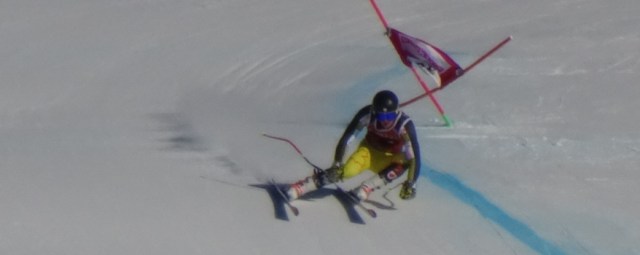
Suited up for the slalom, Sam Mulligan took full advantage of starting first to place 5th in the slalom and move up 21 positions to finish 9th as top Canadian. Jeffrey Read briefly hip-slid which pushed his finish back and was tied with Simon Fournier in 13th position. Riley Seger came within five gates of the finish before straddling a tricky flush. Huston Philp also went off course after a direct confrontation with a gate that broke his face guard.

IMG_3902
Sam Mulligan (Grouse Mt. Tyee)

Gold went to Loic Meillard (SUI), fresh off the World Cup Tour, who blistered the slalom with a 1.18 winning margin. River Radamus (USA) combined solid super G (9th) and slalom (6th) results to take silver. Georg Hegele (GER) used a solid slalom result(3rd) to move up from 19th after the super G to take bronze.

IMG_3904

Action continues tomorrow with the ladies giant slalom, followed by the Nations Team Event in the evening. Canada is seeded 3rd in this event, based on the performance of the Team in Sochi.

IMG_3900Huston Philp (Banff Alpine Racers)


Posted in FIS, Olympic sport, Ski Racing, Uncategorized, World Juniors | Tagged , , , , , , | Leave a comment

Åre 2017: Alpine Combined in focus

Sverige Nationalarenan, Åre – Day 5 – The Alpine Combined took centre stage today. In the Junior Worlds the two-run event is based on super G and slalom.

The weather shifted dramatically as blue skies disappeared to be replaced with a high fogScreen Shot 2017-03-07 at 1.22.13 PM and much warmer temperatures. With flat light on the track, the finish rate dropped with several athletes failing to negotiate a fairly up-tempo super G. Included in those who couldn’t find the finish was Amelia Smart (Team Panorama), a favourite for the slalom leg of the race. Smart unfortunately mistimed a jump and crashed mid-course.
Austrian Nadine Fest continued her domination of the speed events, easily moving into the lead after the super G and she hung on for the win with a solid slalom run. Meta Hrovat of Slovenia, daughter of the mayor of Kranskja Gora, put together solid runs in both legs to take silver. The Austrians continued to pad the medal haul with Franziska Gritsch taking bronze.

Canadian colours were carried by Stefanie Fleckenstein (Whistler Mt. Ski Club). Skiing from outside the top seed (which is ranked by alpine combined points), Stefanie moved into the flip 30 with a 26th place finish in super G. Then she took advantage of her early start to lay down a solid 5th place finish in the slalom, to move up to 14th place in the alpine combined final standings.

IMG_3896.JPG

A field of 103 men take over the Nationalarenan tomorrow for their Alpine Combined race.

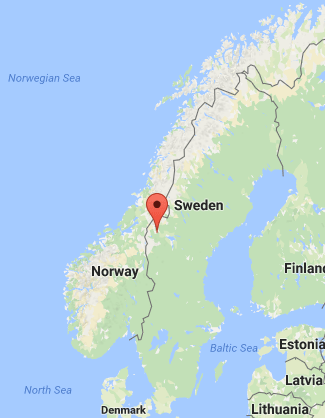
Wonder where we are in Sweden?

Screen Shot 2017-03-07 at 1.25.42 PMÅre is a 1,000-year old community that has become Sweden’s hub for alpine wintersports. Located 600 km. north of Stockholm, the ski resort was founded in 1909 and is now Sweden’s largest ski resort and the highest vertical.

The variety of slopes and rich history of ski racing made Åre an ideal venue to host the FIS Alpine World Ski Championships in 1954 and the resort became a regular stop on the FIS Alpine Ski World Cup after the Tour was founded in 1967. The World Championships returned to Åre in 2007, with Canadian Jan Hudec taking a surprise silver in the men’s downhill.

Sweden has a serious bid in development for the 2026 Olympic Winter Games. Åre would be the venue for alpine skiing. Before that, though, the community will host the 2018 FIS Alpine World Cup Finals in March/2018 and their 3rd FIS Alpine World Ski Championships in February/2019.


Posted in FIS, Olympic sport, Ski Racing, Uncategorized, World Juniors | Tagged , , , , | Leave a comment

Åre 2017: Oh so close for Canada, again

Sverige Nationalarenan, Åre – Day 4 – Under brilliant blue skies action turned to the super G events for men and ladies. “This is not an easy track to set a Screen Shot 2017-03-07 at 1.22.13 PMsuper G on” said Franz Heinzer, Swiss team coach and course setter for the men. “The upper section is open and moves well, as does the lower part. But in the traverse in the middle it is steep and tricky to keep the speed right for junior racers.”
Heinzer’s set was fairly technical, but no one expected the race to be so tight. Only two hundreths of a second separated the top three, With Nils Alphand (FRA) squeezing out the win in 1:17.91. Raphael Haaser (AUT added a silver medal to his bronze from the downhill in 1:17.92. Semyel Bissig (SUI) was hard on his heels in a time of 1:17.93 for bronze.

IMG_3886Sam Mulligan (Grouse Mt. Tyee) had to settle for 4th a mere .02 off the podium with a time of 1:17.95. Mulligan led three Canadians into the top 13 with Jeffrey Read (Banff Alpine Racers) in 11th with 1:18.42 and Riley Seger (Whistler Mt.) in 13th with 1:18.53.

The remaining Canadian story was Jack Crawford, silver medalist in super G from the 2016 Championship leading at the second split, but went off course; Simon Fournier (Mt. Tremblant) came in 44th in 1:20.37; Huston Philp (Banff Alpine Racers) in 49th in 1:20.67.

“We really wanted a medal” said Team Leader Dusan Grasic, “but I must say I am very happy with three in the top 13 and Jack in the lead. This was a strong team performance from the guys.”

In the ladies super G, Austria dominated taking the top four spots, led by Nadine Fest who is currently leading the Europa Cup super G standings. Fest dominated the field with a commanding 1.19 second win over teammate Franziska Gritsch with silver, Dajana Dengscherz with bronze and Nina Ortlieb in 4th. Top Canadian was Stephanie Fleckenstein (Whistler Mt.) in 31st, with Amelia Smart (Team Panorama) placing 44th. Antonia Wearmouth (Grouse Mountain Tyee) did not finish.

In the Marc Hodler Cup, Austria has taken a commanding lead ahead with 50 points, ahead of USA and Switzerland whoa re tied for 2nd with 29 points. Canada currently sits in 6th with 14 points.

Tomorrow the ladies take centre stage with the alpine combined (super G and slalom). The men have a one-day break before resuming racing on Saturday with their alpine combined.

FullSizeRender
Amelia Smart (Team Panorama)

IMG_3885

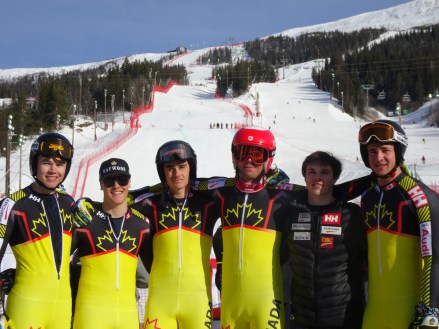
Team Canada at the #jwsc2017: Cameron Alexander (Whistler), Sam Mulligan (Grouse Mt.), Jack Crawford (Whistler), Antonia Wearmouth (Grouse Mt.), Simon Fournier (Tremblant), Jeff Read (Banff Alpine). Kneeling: Riley Seger (Whistler), Amelia Smart (Team Panorama), Stefanie Fleckenstein (Whistler). Missing are: Ali Nullmeyer (Georgian Peaks), Huston Philp (Banff Alpine) and William Bruneau-Bouchard (le Massif)


Posted in FIS, Olympic sport, Ski Racing, Uncategorized, World Juniors | Tagged , , , | Leave a comment

Åre 2017: The US sweeps DH titles

jwsc_bannerSverige Nationalarenan, Åre – Day 3 – Downhill action took centre stage. After an early dusting of snow, the sun poked through a high layer of cloud, but it was nearly perfect race conditions to host the ladies followed by the men.
For the first time in recent memory, the World Junior have a challenging downhill, as the site used is the men’s World Championship downhill from 2007, just from a lower start. The organizers had previewed the race to have ‘good air’ and they followed through with numerous jumps on a technically challenging slope – but every jump was well designed to ensure excitement and a good test. The last World Juniors downhill that used a World Cup track was in 2010 at Crans Montana (SUI).

It was a banner day for the US Ski Team, as Alice Merryweather (Stratton Mt.), attending her fourth straight World Junior championship became the first US female athlete in 15 years to capture gold. Merryweather nipped Katja Grossman of Switzerland by .02 with World Cup skier Kira Weidle of Germany taking bronze.

On the Canadian front, Stefanie Fleckenstein (Whistler Mt.) placed 30th and Antonia Wearmouth was DNF.

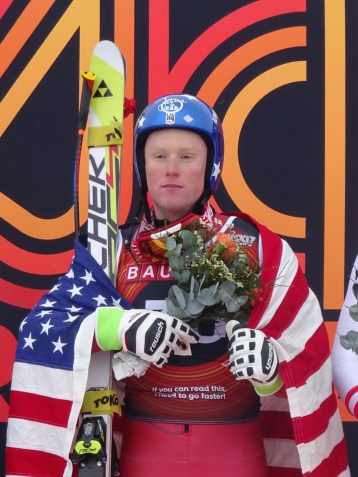
IMG_3880Not to be outdone by the US ladies, Sam Morse (Carrabassett Valley), whose coaches had the first choice of number in the draw, started #30. But Morse used the last spot in the top 30 effectively to take gold. Europa cup skier Alex Prabst of Italy was .38 behind with Raphel Haaser (brother to rising World Cup star Ricarda) led an attack from the back by capturing bronze from start position #50.

Jack Crawford (Whistler Mt.) was top Canadian in 4th, narrowly missing the podium by .11. Jeffrey Read (Banff Alpine Racers) placed 12th in this closely-packed field. Sam Mulligan (Grouse Mt. Tyee) tied for 28th; Riley Seger (Whistler Mt.) 41st; Cameron Alexander (Whistler Mt.) 44th; and Simon Fournier (Mt. Tremblant) 47th.

Racing continues tomorrow with super G. The men start at 9:30, followed by the ladies at 11:00.

IMG_3871

Posted in FIS, Investing in athletes, Olympic sport, Ski Racing, Uncategorized, World Juniors | Tagged , , , , , , | Leave a comment

Åre 2017: Leading with speed

jwsc_logo

Sverige Nationalarenan, Åre – Day 2 of the #wjsc2017 dawned crisp and cold with the second of two training runs for ladies and men on the program. While the wind was gusty enough to stop operation of the upper gondola, the ski resort provided cats to pull athletes to the top start to enable use of the entire downhill.

The track hardened considerably overnight, thanks to clear skies, cold temperatures and high humidity. “It is an excellent surface for this level of competition” said Peter Gerdol, FIS Race Director for the men. “Firm, fast and not too slick.”

Twenty year old Dajana Dengscherz (Kitzbuhel Ski Club) of the Austrian Ski Team led the ladies training run with a time of 1:25.88. Team Austria and Team Sweden dominated, taking 6 of the top 7 spots.

Link to ladies results: https://data.fis-ski.com/dynamic/results.html?sector=AL&raceid=87158

Nils Alphand (Ski Club Serre Chevalier) of France led the men’s run with a time of 1:24.48.

Link to the men’s results: https://data.fis-ski.com/dynamic/results.html?sector=AL&raceid=87159

Today’s report is brief, as we have an early morning tomorrow.

Video: Racer #1, Stefanie Fleckenstein (Whistler Mt. Ski Club)


Posted in FIS, Investing in athletes, Olympic sport, Ski Racing, Uncategorized, World Juniors | Tagged , , , , , , | Leave a comment

Åre 2017: A strategy of excellence

image1Under sunny skies but with a pesky wind that forced organizers to move to a lower start, the opening day of the 2017 World Juniors got underway with the first training run in downhill for both ladies and men.
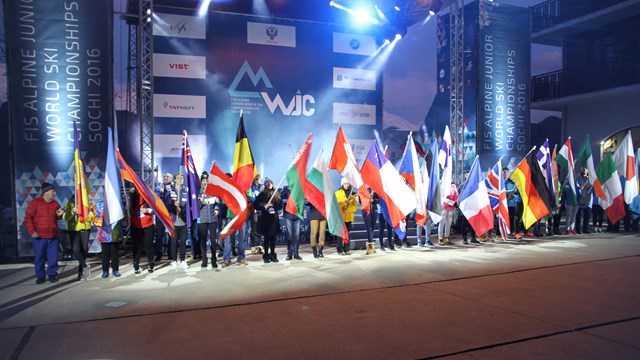
The journey that has brought over 600 athletes from more than 45 countries this week to this traditional World Cup venue, started with the awarding of the 2019 FIS Alpine World Ski Championships to Åre in the FIS Congress of 2014.

Niklas Carlsson, CEO Åre 2019 welcomed the teams and parents this evening in the Opening Ceremony, sharing with the a packed house that the mission of the organizers is “to inspire the world to ski”.

Åre will host the World Championships for the 3rd time – 1954, 2007 and 2019 – and behind the bid was a hosting strategy to upgrade slopes, begin the process of training a larger pool of volunteers and to sharpen the skills of the organizers.

As a regular stop on the ladies World Cup Tour, the needed attributes that build a good competition venue are there: a volunteer base, experienced race organizing committee and a ski resort familiar with the demands of hosting a major ski event.

But the scope of a World Championship is broad and the very high standards set by Val d’Isere (2009), Garmisch (2011) and Schladming (2013) and subsequent to their selection as a host by Vail/Beaver Creek (2015) and St-Moritz just a few weeks ago, meant Åre could not just sit back on their base of 2007.

So Åre emulated Garmisch and bid for the 2017 Junior World Ski Championships and committed to host the 2018 Alpine Ski World Cup Finals. Garmisch was the first Championship organizer to use the World Junior/World Cup Finals to hone their preparation.

The Junior World Championships offers an opportunity to put the men’s track into use. The numbers of athletes and countries participating is similar, but the scope is far more manageable. Preparation of the competition slopes must be absolutely world-class, but within modest expectations for media, spectators, security and sponsorship activation.

The enormous benefit is to the younger athletes. Many attending the World Juniors will be back in two years for the 2019 Worlds. This gives them their first preview of the slopes and venue. And most will not qualify for the 2018 World Cup Finals which is a restricted field event for the top 25 in each World Cup discipline.

The 2018 World Cup Finals bring different demands. While the number of athletes are modest, the Finals require the full compliment of race venues and start to push the scope of capacity for the off-snow deliverables of the Organizers, with significant expectations from sponsors, activation, thousands of spectators and comprehensive TV coverage of all events.

In 2007, Åre set the bar very high for subsequent World Championship Organizers, many of whom accepted the challenge and pushed the standard even higher. Now, a decade later, our Scandinavian hosts are using an extended event hosting strategy to re-write the ski racing major event hosting book.

And the main beneficiaries are our champions of tomorrow – our juniors – many of whom will capitalize on multiple visits to Åre over the next three seasons.

This, is how a sport legacy is built. This is a major competition where the focus is on the athlete. This is sensible, sustainable sport development. This is cost-effective venue development which benefits sport and the community.

This is the future.

jwsc_logo


Posted in FIS, Investing in athletes, Olympic sport, Ski Racing, World Juniors | Tagged , , , , | Leave a comment

Åre hosts the future #JWSC2017

jwsc_logo

Tomorrow, the 36th FIS Alpine Junior World Ski Championships will open in Åre, Sweden. Over 300 of the best junior alpine ski racers in the world, from over 45 nations, will gather for competitions in all alpine events.

The “World Juniors” are a preview of the next generation of ski champions. The age range covers ages 16 to 21 (birth years 2000 to 1996).

Aare is a unique host for this event. The World Juniors are a trial run for the 2018 World Cup Finals and the 2019 FIS Alpine World Ski Championships. For the junior athletes, this is an incredible opportunity to get experience on a World Championship venue, as many who compete over the next 10 days may well be part of the senior event in two years.

The World Juniors include the same events as the World Championships and Olympic Winter Games. So in addition to the five core events of slalom, giant slalom, super G, downhill and the alpine combined, the teams will go head-to-head in the Nations Team Event.

The Marc Hodler Cup is unique to World Junior competition. This is the overall team competition, measured through compilation of top 10 results in each event through a 10-9-8-7-6-5-4-3-2-1 format – which is significantly different to the World Cup Nations Cup (measured by World Cup points).  In 2016, the title was decided on the final day in the last event as Austria narrowly topped the list. Standings from 2016 are here: https://data.fis-ski.com/dynamic/marc-hodler-trophy.html?seasoncode=2016&sectorcode=AL

A listing of previous winners can be found here: https://data.fis-ski.com/global-links/statistics/top-winners.html?catcode=WJC&sectorcode=AL

An overview of previous organizers can be found here: https://data.fis-ski.com/global-links/statistics/event-overview.html?catcode=WJC&sectorcode=AL&search=Search

Throughout the Championship, I will try to post anecdotes, photos and stories on this blog. If you would like to follow the action, here are the key sites to get updates, photos and news reports:

Twitter: @JWSC2017

Facebook: http://www.facebook.com/jwsc2017/

Instagram: jwsc2017

Live timing on the FIS web site

Home page: are2017.com/

opening


Posted in FIS, Olympic sport, Ski Racing, Uncategorized, World Juniors | Tagged , , , , , , | Leave a comment

Still a revolutionary concept after 50 years

The young boy was focused on his homework, under the watchful eye of his grandmother. It wasn’t easy as it was mid-January. Hahnenkamm week in Kitzbühel and the best ski racers in the world were in town. The Austrian lion, Karl Schranz and French rising star Jean Claude Killy. Athletes from Germany, United States, Italy, Switzerland, Canada and many more nations, here to challenge the Streif and Ganslern race tracks. To be able to watch the race from the deck of your home was a thrill. But grandmother made sure he put in his time with his studies at night.

This particular evening, a few special guests arrived. Each acknowledged the youngster as they knew his father well, Ernst Hinterseer – 1960 Olympic Champion in slalom. They then settled into deep discussions in an adjacent room. As they went about their business,  the young boy kept focused on his homework.

Hansi Hinterseer has lived ski racing history. That January evening fifty years ago in the Seidlalm was a gathering where the concept of the World Cup was first proposed. Attending were Serge Lang, who founder of the concept and fellow collaborators Honoré Bonnet and Bob Beattie. “I had no idea what they were meeting about” said IMG_3674.JPGHansi. “I was very young, only twelve at the time, but because they knew my father well, they always said hello to me. Pretty ironic that I would be able to benefit from their idea!”

Seven years later, in January 1974, the young boy would not only capture the slalom crown of the Hahnenkamm – just down the hill from his home – but also win the giant slalom crystal globe.

The “concept” was truly revolutionary. Back in the mid-1960’s skiing was enjoying tremendous growth in popularity worldwide. Interest in ski racing was booming. But the international racing circuit was a haphazard collection of three classic races: the Hahnenkamm of Kitzbühel, Wengen’s Lauberhorn and the rotation of the Arlberg-Kandahar between Garmisch, Chamonix, Mégeve, St. Anton and Sestriere. There were more races, including the 3-Tre of Madonna di Campiglio, Val d’Isere’s Criterium de la Premiere Neige and interest outside of Europe, but no system defined where the best should go.

The World Cup concept existed in the football world, but it was held every four years. Serge Lang’s new idea was to create a World Cup Tour that would bring together all the best athletes from every country every year. To establish a clearly defined world-wide circuit with the best venues and all the top athletes. The Alpine Ski World Cup became the first organized annual international tour in all Olympic sports.

Today we take it for granted that a World Cup brings together the best in the world. Ranking systems (the World Cup Start List or WCSL) is based on World Cup results. Qualification to the World Championships or Olympic Winter Games is premised on results in World Cup. The circuit has become quite prescribed, with many venues now described as “classics”. Even the World Cup Race organizers have seconded the name as “Club 5+ Classics”. And with many having participated in the Tour for fifty years, it is fair to allow them into the exclusive club.

neureuther-verpasst-slalom-podium-von-kitzbuehel_pdaarticlewideAcross five decades, the colour, tradition and history of the Alpine World Cup has captured the imagination of the sports world. In 2017, Killington attracted one of the largest crowds ever to watch a ladies World Cup race. The 77th running of the Hahnenkamm in Kitzbühel drew more than 50,000 spectators for the downhill alone, to take in the thrill of athlete against the mountain. Athletes from more than 25 different nations have earned podiums. An American is poised to surpass the record of most World Cup wins, which has been held by a Swedish superstar.
There are always growing pains, as the World Cup has matured from a brash, innovative idea into a defined concept and big business. It has become very challenging for younger athletes to break into the elite in force, as costs escalate and sponsor opportunities become harder to land in a very busy sports landscape. Organizers face soaring costs to stage events, with enormous infrastructure and safety installation capital. The sport is always facing a balance of respect for tradition which has been the bread and butter of the World Cup for 50 years, against growing pressure to be innovative with new event ideas.

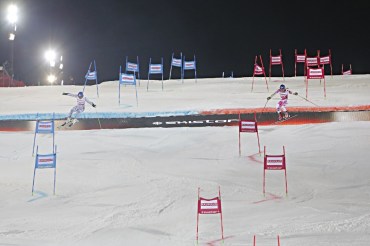
Newer concepts such as the Nations Team Event, a mixed gender dual slalom format that is stockholmnow part of the Olympic program in 2018, continue to build interest. The World Cup continues to wrestle with the ‘parallel’ or individual dual format, with two concepts: the “City Event” which is a parallel slalom in Stockholm and the “parallel GS” now held annually in Alta Badia. Both present tremendous opportunity to bring alpine ski racing to more intimate venues where spectators can truly appreciate the skills and bravado of the athletes in an easily understood head-to-head format.
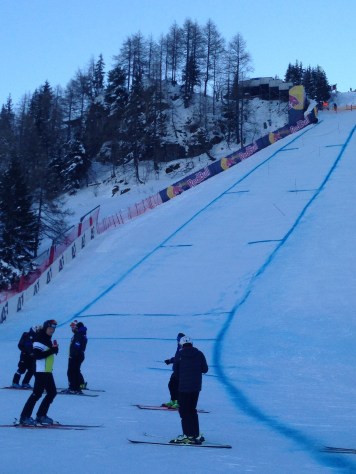
But in the face of change, the Alpine Ski World Cup has endured as a revolutionary concept. A Tour where in every competition the best are always taking on the best on the most challenging venues. In each and every World Cup race the winner is World Champion for a day – the best human on the planet. Very few sports consistently offer such a standard. Ski racing remains the primary draw of winter sport. The worldwide TV audiences remain robust. New venues clamor to gain a coveted spot on the calendar.

You want to understand real “extreme sports”? Go no further than the Hahnenkamm at Kitzbühel. Nothing in the winter sporting world compares to the challenge of facing down the Hausberg and Zielschuss of the Streif and plunging into the finish arena, in front of a hill black with spectators and a world-wide audience exceeding 200 million viewers.

This is the cradle of ski sports. Where the Alpine Ski World Cup was founded. Where tradition is respected, innovation is embraced and the culture of alpine ski racing is celebrated every year.

Posted in FIS, Hahnenkamm, Investing in athletes, Olympic sport, Ski Racing, Uncategorized | Tagged , , , , , , , , | Leave a comment

Champions School On The Streif

Dr. Michael Huber
President, Kitzbuhel Ski Club
A-6370 Kitzbuhel, Austria

Dear Michael:

I knew this day would come. The Streif is an old friend. A venue we always looked forward to. A track that was honest, tough, brutally fair and pure adrenaline to race. We were boys! We loved to face down a challenge. The tougher, the better. We wanted to push our limits, see how far we could go, but as we quickly learned, always within respectful boundaries.

Thanks to the guidance of Mike Wiegele, an influential coach in my early years of ski racing, I discovered the excitement and tradition of ski racing on the classic tracks: the Arlberg-Kandahar, Lauberhorn-rennen and Hahnenkamm. I was introduced to the personality of each downhill – the Mausfalle, Steilhang, Alte Schneise at Kitzbuhel; Hundschopf, Hanegg-schuss and Osterreicher-loch of Wengen. These colourful names then came alive when in 1975 I earned my place on Canada’s World Cup Team.

Each section posed a puzzle to solve: reading the snow and careful inspecting of the track to discover the fastest line to the finish. Building confidence to push to the limit. But never beyond.

img_3690As a Hahnenkamm-Sieger, I know what it takes to win on The Streif. To unlock the secret path. To make the world’s toughest downhill your friend. But as time has marched forward, speeds have mounted. Surfaces have changes to be harder, more durable. Equipment is faster. Training opportunities have diminished – in our day it was quite normal to have five or six training runs before race day. Now, two or even one are the norm. Extensive safety installations line the entire four-kilometre track to protect the athlete. The crowds seem to grow each year, drawn like moths to the flame – to take in the spectacle of man against an impressive mountain – and the siren song of the threat of impending disaster.

I knew the day would come when one of my children would reach a level to be in the start gate on The Streif. For many years I’ve wrestled with this, wondering what would run through my mind as the start-clock began the countdown.

There is always a lot of talk about the reputation of the Streif. Scary. Intimidating. I never felt this. There was always a deep respect, but Hahnenkamm week was the highlight of the season – when “real” downhill racing began. Where it was tough, it was honest and it was fair. I thrived in the starthouse and had to learn to curb enthusiasm in the finish to first carefully reflect on the run … and then feel the rush of energy from a thrilling ride down an awesome track.

So when one of your own is in the start gate, ready to build their own relationship with The Streif, what goes through your mind?

To be honest, as the race progressed, like always, there is a nervous anticipation. But this is more because like any parent, you hope they perform to their expectations. It’s their journey, their experience. Ski racing parents learn to be supportive, positive and ready to do the driving – but the rest is up to the young athlete. What they learn frIMG_3695.JPGom the daily guidance of their coaches and competition with their peers. How they absorb the environment and learn. It is their ski racing experience.

The EuropaCup experiment on the Streif was brilliant. It gave this younger cohort a taste of the show. A big bite out of a very tough track to learn. Excellent preparation for the Hahnenkamm. It taught them the importance of respecting the track, showing patience with the line and that racing downhill is the most thrilling experience a young man can ever have.

Your Organizing Committee used every aspect of the event to teach, to give young athletes a taste of the World Cup, incorporating the race into the Hahnenkamm week. From the opening ceremonies, pre-race bid draw, an extra training run through the Mausfalle and Steilhang sections, use of the exclusive warm-up area at the start, live TV coverage on ORF (with exceptional TV ratings!), prize money and awards – the approach was to expose, teach and support. All your people were outstanding mentors, committed to a learning environment to prepare these youngsters for the future.

The next generation of athletes, who in a few short years will become the champions of the Streif, were energized for more. They are, after all, boys at heart. And they love a tough adrenaline challenge. This, has never changed.

The Kitzbuhel Ski Club, as custodians of the Hahnenkamm tradition, have been innovative – showing tremendous sensitivity to the ongoing challenge of good athlete development and how best to nurture the next generation of speed skiers. Alongside three other World Cup organizers of speed events: St-Moritz, Lake Louise and Wengen – each with their own unique (and successful) approach in supporting the next generation and providing access to World Cup venues – younger athletes are getting the invaluable experience necessary to transition to the toughest level of competition in our sport.

This investment into the future will pay enormous dividends. So because it is never said enough in alpine ski racing, “thank you” to for thinking of the younger generation, for your investment into Continental Cup level.

Yours in sport,
Ken

Link to race results: https://data.fis-ski.com/dynamic/results.html?sector=AL&raceid=87042

Official media release: https://www.hahnenkamm.com/schweizer-gewinnt-ec-premiere/

Featured Image: 2017 Hahnenkamm European Cup downhill winner Gilles Roulin (SUI)

Posted in Continental Cup, FIS, Hahnenkamm, Investing in athletes, Ski Racing, Uncategorized | Tagged , , , , , , , , , | 5 Comments