The Hahnenkamm invests in the future

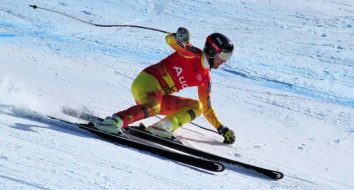
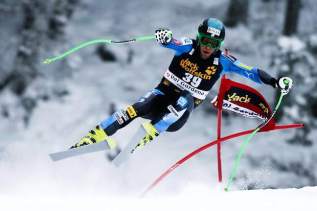
The Kitzbuhel Ski Club launched a new project this year, starting Hahnenkamm-week with a EuopaCup downhill. This event is fully integrated into the week, with live TV coverage. It is a shortened version of the track, starting from just above the Mausfalle and finishing at the Ober-Hausberg.

Today’s race gave 86 younger and aspiring athletes experience on the toughest downhill in the world.

From athletes – who were pumped from this great experience; to organizers who were thrilled with the outcome of the race; to officials of several FIS sub-committees who were on-site to take in the race – thumbs up .

Now, these athletes have a base of experience. The KSC used every event – from the bib draw, inspection, use of the start building with its private athlete lounge, live TV, video wall at finish, prize money, whosting and awards ceremony – to give the EuropaCup (and more) athletes a taste-test of the “real deal”.

News release from Kitzbuhel: https://www.hahnenkamm.com/en/schweizer-gewinnt-ec-premiere/

Editors note: apologies for the quality of this post – which has been done from my iPhone. IT issues in Austria!


Posted in Continental Cup, FIS, Investing in athletes, Olympic sport, Ski Racing, Uncategorized, World Juniors | Tagged , , , , , , | Leave a comment

Our Early Season Advantage

Updated –Lake Louise and Killington confirmed” were welcome words from the International Ski Federation (FIS) for the ski racing community of North America. Finally, the weather cooperated and at least the ladies World Cup Tour of North America could proceed without disruption.

killington2The anxious days awaiting the final decision of “snow control” prompted a wide discussion about why the World Cup races are held in Canada and US in this specific time frame. All sorts of rumour and debate floated across mainstream and social media.

So a little Corporate Memory might be in order.

The first early season World Cup race in North America was held at Park City on November 29-30, 1986. “America’s Opening” became a fixture on the World Cup Tour from season 1991-92, initially alternating men and ladies. Other early season US races included stops at Breckenridge (1991), Steamboat and Vail (1992).

In an unusual move for the FIS, the entire ladies Tour in December 1992 took place in North America, as Lake Louise moved their speed events from the spring to December for the first Canadian early-season race. The following season continued this philosophy, with the men in North America at Park City and Stoneham.

But here is a fact the North American World Cup organizers can be very proud of. Every season since 1994, the ladies calendar has featured Canadian and US races to start the ‘core’ season. Even in this challenging year, the courageous efforts of the race organizers in Lake Louise and Killington met snow control with the build-out of their venues and competition slopes – and have kept this run intact.

So why do the North American organizers take on the risk every year to host World cup races? Because they can.

First, let’s look at Lake Louise. From 1992, (after a one-year hiatus in 1993) the volunteer race crew – known as the “Sled Dogs” – have organized ladies races continuously for 22 years. The men were included in the Lake Louise program from 1999.

But how about this fact: the Lake Louise World Cup halakelouise1s the best track record for staging of races on the entire World Cup circuit. The unfortunate cancellation of the men’s races due to lack of snow earlier this year is the first for Lake Louise since 1980. With a total of 112 competitions, 103 have been held in November and December. For accuracy, there were two races out of the 112 total that were cancelled – both for too much snow – a slalom in 1991 when a last minute deluge of snow made it impossible to make a firm surface and a downhill in 1995 which was controversially cancelled at racer #29 when a snow squall hit the track during the race.

Positioned at 51º North, with the sun low in the sky in the early season time frame, with the help of both Mother Nature and snowmaking, Lake Louise has delivered. Every year.

lakelouise2The men’s race is calendared as the first speed event of the winter. Lake Louise is given quite a bit of latitude in meeting “snow control” by the FIS Race Pros, as there is no other spot on the planet that can host a World Cup speed race in the final week of November – with any confidence or guarantee which is necessary for the staging of such events.

Even with the unusually dry and warm conditions that were impacting western North America the past few weeks, Lake Louise only missed maintaining their remarkable streak by a few days. Preparations continued for the ladies events with a green light to proceed coming this past Monday. Think of it this way: had colder temperatures come just a few days earlier, it would be race-on at “The Lake” this Saturday.

Turning to Beaver Creek, the US annual World Cup stop, hosting their events in the first week of December provides enough time to post a similar record of success. A total of 65 races held in the early season, including cancelled races from Val d’Isere in 2011. Altitude, and the same relentless commitment by a dedicated race crew at Beaver Creek is what makes Colorado work for World Cup. With the finish at 2,730 metres (and top at 3,480 or 11, 400 ft.), Beaver Creek towers over most venues.

The early-season training venues in both Colorado and the Canadian Rockies are another clear indicator of why early season World Cup races are possible. In the US there is Copper Mt., A-Basin, Loveland, Vail and Aspen, with more coming on-line. Canada offers early season at  Nakiska, Panorama, Norquay and Sun Peaks.

killingtonA special mention of Herwig Demschar and his amazing race crew and staff at Killington, who are organizing the first World Cup race to be held in the eastern US in 25 years (Waterville Valley in 1991). From all reports, the snowmaking crew are the heroes, using every second of proper temperatures to blow enough snow on “Superstar” to meet snow control last week. Running this race is an incredible plus for the World Cup Tour and the sport of ski racing, with a sold-out venue and enormous interest to watch local favourite Mikela Shiffrin.

In sum, the North American World Cup Tour – the sweat equity invested over more than two decades by an army of volunteers and ski resort staff – has a remarkable track record of delivery.

Being a reliable host is most important, but there are other reasons why the early-season World Cup Tour makes sense. The majority of national teams now do their final tune-up for the season in either Colorado or Alberta, where they find reliable snow conditions. From the ski resort perspective, there is significantly less competition for hotel space than later in the ski season making it a lot easier for the venues to work with the Race Committee to keep accommodation costs reasonable.

And then there are the economics of ski racing. Every race venue relies on revenues from three key sources: sponsorship, TV rights and timing. These are the drivers of money to run the events and provide prize money. The early season races drive higher TV audiences world-wide, with Beaver Creek and Lake Louise races usually rank in the top ten of all World Cup races throughout the season. The timing inserts (that quick hit of advertising that pops up after interval times and at the finish) are tracked by an independent 3rd party, with revenue split between all World Cup organizers based on TV audience. Guess which venues are near the top every year? Lake Louise and Beaver Creek. Early = high interest.

So armed with over two decades of experience running early season races, rest assured there is considerable thought and strategy behind the North American Tour. There are dedicated pros – volunteers, but they have become experts in pulling off these events and working closely with the FIS Race Directors to host great events to start each season. It makes economic sense, logistic sense and most important – the track record is reliable.

IMG_1698

Author’s note: if a reader comes across any errors with the statistics included in this piece, please advise and it will be corrected immediately.

Posted in FIS, Ski Racing, Uncategorized | Tagged , , , , , | Leave a comment

Downhill: Transforming experience … into results

UPDATED (July 21) – For over two decades the Canadian Rockies have been a picture-perfect backdrop for athletes, coaches and volunteers working tirelessly to deliver one of the most reliable race blocks on the FIS calendar.

Over a three-week period through late November into December, Lake Louise is home to ski racing elite for the opening speed events for the men’s and ladies World Cup Tours. Once the World Cups are complete, Nor-Am speed events, which were included for the first time in 1995, move onto the track. This makes the Lake Louise Nor-Am events the longest-running Continental Cup level races held in conjunction with the elite World Cup.

Almost every Canadian and US athlete competing on the World Cup have earned their spurs at this western Canadian ski resort.

From the beginning, the primary objective was giving younger athletes exposure to speed in the right training environment. “We saw this as a great opportunity to take advantage of the safety build-out of the World Cup and give our younger athletes invaluable experience on a world-class track”, said former Alberta Alpine General Manager, Maureen O’Hara-Leman, who oversaw running of these races in the early years.

Lake Louise is seen as a perfect opening downhill for the World Cup men, a high-speed eye-opener after a long training season. For the ladies, it ranks as one of the toughest tracks on their Tour. So following the World Cup, the race track is ‘detuned’ (track re-groomed, jumps shaped) and shortened to align with the Continental Cup level of competition where athletes are still learning the ropes of speed.

The Olympic downhill still remains a test, delivering high-speed (bumping up to the range of top speed of 130 kph), the challenge of big air, rough tracks, variable visibility, blind corners, fallaways and gliding. Hundreds of athletes have been given a fair taste-test of what to expect if they are aiming for the World Cup and beyond.

“Downhill is the biggest adrenaline rush in sport,” says Nigel Loring, CEO of Alberta Alpine, whose staff and volunteers are the anchor to run the annual Nor-Am races. “This is a huge opportunity for athletes to ’round out’ their experience for speed. It is a perfect transition from regional speed venues to the World Cup as it gives athletes all the elements they need on a track that can offer great conditions and is one of the most reliable in the world.”

Training is not reserved solely for athletes. Look behind the athletes blitzing the downhill track and you find an extensive network of officials and volunteers working diligently to make the race arena safe, exciting and challenging.  “We see the benefits out past the athlete experience, as this is the very best training ground for our volunteers” said Darrell MacLachlan, men’s Chief of Race and Executive Director for the Lake Louise WinterStart World Cup. “These are the people who will gain experience at the Nor-Am, to give them the training to move up to the World Cup or any major events in Canada. The World Cup and Nor-Am race committees share resources and meet regularly. We see this as is a combined work force, relocating material in the spring and doing build-out in the autumn.”

It should be no surprise the outcome of this investment into younger athletes on the Nor-Am would be strong World Cup results. The evidence is clear: Lake Louise is one of the most successful World Cup venues for the Canadian and US Ski Teams*, with the following record as of December/2015:

  • 57 World Cup podiums for Canadian and US Ski Team athletes (46 by USA, 11 by CAN)
  • 17 different Canadian and American athletes on the podium
  • 10 of the 17 also appeared on a Lake Louise Nor-Am podium
  • 155 top 10 World Cup results
  • Inaugural World Cup podiums for Johnny Kucera (1st win), Manny Osbourne-Paradis, Erik Guay, Kelly Vanderbeek, Britt Janyk, Jan Hudec (1st win), Marco Sullivan and Stacey Cook

*Val Gardena is the most successful World Cup venue for Canada, with 16 podiums.
*Beaver Creek is the most successful World Cup venue for US men, with 26 podiums.

Canadian journalist Beverly Smith, reporting in the Globe and Mail on Johnny Kucera’s first World Cup win at Lake Louise on November 26, 2006,  wrote “He knows the track well: he’s been racing at Lake Louise for the past six or seven years, he said. It helped.”

events-nor-am-werryIn addition to the athletes noted above, the Lake Louise Nor-Am podium record reads like a who’s who of ski racing, including a long list of athletes who have moved on to World Cup, World Championship and Olympic success: Julia Mancuso, Jonna Mendes, Travis Ganong, Laurenne Ross, Andrew Weibrecht, Alice McKennis, Ivica Kostelić, Scott McCartney, Ben Thomson, Francois Bourque, Natko Zrncic-Dim and Larisa Yurkiw. Even the most successful athlete on the hill with 18 wins in downhill and super G at Lake Louise raced in a Nor-Am before she reached the World Cup level. Lindsay Vonn raced the track once – a super G – in 2001.

If any more evidence is needed to validate the benefit of the Nor-Am to the athlete development pipeline, consider the outcome of the ladies World Cup on December 6, 2014 where US and Canadian athletes, all graduates of the Nor-Am, took five of the top six spots. (http://data.fis-ski.com/dynamic/results.html?sector=AL&raceid=78864)

Is Lake Louise too challenging for the Nor-Am level athletes? Absolutely not. The safety record is one of the best in the business, thanks to a highly experienced race organizing committee and the careful management of the track surface as the event is transitioned from the men’s World Cup through the ladies World Cup to the Nor-Am. Many of the Nor-Am athletes are prepared through forerunning experience from the World Cup races. The typical progression for first-year FIS athletes is forerunning the Nor-Am. Size of fields have been small in recent years, making management of the field easier for the jury. And running the Nor-Am was never a cash-grab for the organizers. In fact, the event relies on significant goodwill from both the Lake Louise Resort and the World Cup organizing committee to find ways to economize to keep the budget in check.

Setup of any speed venue is an enormous task. The rationale of coat-tailing a Nor-Am to the World Cup is to take advantage of the hard work invested by the WinterStart Race Committee. In return, on the final day of Nor-Am racing, as soon as the last athlete crosses the finish line the athletes, coaches and small volunteer crew spread out on the track, roll up their sleeves and in three hours the entire race track is stripped bare of B-net, crowd control fencing, airbags and finish corral.

The core mandate of sport organizations is to deliver podium potential. To give athletes the exposure and experience on world-class venues to learn to become champions, to build a pathway that will transition athletes into the World Cup and to the podium in World Championship and Olympic competition.

The the evidence is clear: supporting a Continental Cup event on a World Cup venue gives younger athletes the tools for future success.

White Circus – Weiß Zirkus – Cirque Blanc will take a break during the Olympic Games in Rio, to take in the excitement of world-class athletes competing on the world stage. 

If you find an error in the stats listed above, please let me know. I try my very best to be accurate.

An enormous thank you to Dustin Cook who forwarded correct stats regarding CAN & USA podiums at Lake Louise and that Val Gardena is the most successful venue for Canadian men.


Posted in Continental Cup, FIS, Investing in athletes, Nor-Am, Ski Racing, Uncategorized | Tagged , , , , , , | 1 Comment

Downhill: The Experience Factor

“Finally I’m figuring out how to mentally attack these downhills. Before I was always kind of nervous because it was my first or second time skiing these courses. But this is my third year in Bormio and I feel like I can just relax a little bit and have fun. I love to ski and in the last few years I had to tone back how I ski because you have to really learn these downhills before you can attack. Now I feel that I know them, I can attack and I can be up there with the best guys.”

Travis Ganong in SkiRacing.com December 29, 2012 after finishing 7th in Bormio

Moving to the elite level of any sport is not supposed to be easy. It takes time and courage. There is a blend of physical and mental maturity. In ski racing, and especially in downhill, the experience factor is critical. And there is only one way to earn experience: by running the track.

Gaining the intimate familiarity necessary to succeed in downhill has evolved over time. From the earliest days, which where completely unregimented, safety and speed have shifted the fundamentals. First it was straw-bales and mattresses. A training free-for-all evolved to a starting order and then to disciplined starts and tight supervision within the race arena. In todays’ World Cup, training is serious business with security to control movement on the track; a clearly defined starting order with a competition surface and course set intended to be safe and as fair as is possible for a sport that lives with the elements.

So from those early years of the sport where Ernst Gertsch secretly “trained” on the Lauberhorn downhill so he could best the visiting Brits; to the tightly regimented downhills of today where the maximum number of training runs would be three – gaining experience remains fundamental.

I look back on my own experience of the 1970’s and 80’s, where two training runs per day was the norm, giving us five to six runs down the track before a race. Only on one occasion did I get anything less than three: Kitzbühel in 1983, which was beset by weather challenges. By todays standard we were well schooled.

A rookie moving up to the World Cup from any of the Continental Cup circuits faces a pretty big hurdle to learn the track these days. With the usual standard of 2 or maybe 3 training runs – but quite often only one – a newcomer to the Tour faces a daunting task.

There are very good reasons for so carefully prescribing training. The World Cup is our showcase to the world. The focus on maintaining an exciting and safe track is paramount. The World Cup is not where you train athletes: it is a gathering of the best to compete.

So if experience is key, yet the goal of each event is to produce the best athlete in the world, how do rookies earn their spurs?

Well, it’s been said so many times: program patience is an essential element. Insightful athletic leadership knows it not unusual to take up to five years (or more!) to transition from a rookie to a contender. Time to fully know and appreciate the nuances of each track, to be in the position to think about winning.

Using Travis Ganong as an example of one of the “younger” athletes to recently make this transition, the 28-year old World Champion silver medalist raced his first World Cup in November/2009 (Lake Louise), scored his first top ten in December/2012, his first downhill podium in February/2014 (Kvitfjell) and his first win at Santa Caterina in December/2014. A five-year journey to the top.

A sampling of prominent speed pilots reveals the same pattern: several years of gaining experience before the results come. Norwegian rising star Aleksander Aamodt Kilde transitioned quickly (within three seasons: November/2013 to his first win at Garmisch in February/2016) – but still only has three top 10 results. 2014 Olympic Champion Matthias Meyer took four seasons (December/2010 to February/2014). For 2016 World Cup Downhill Champion Peter Fill it was six years (November/2002 to November/2008). In every case, their early races are populated with plenty of results out of the top 30.

Several World Cup venues are working on ways to shorten the gestation period, actively promoting these options to help younger talent “learn the ropes”. The common goal of each project is to give Europa Cup or Nor-Am athletes time on a World Cup track.

Lake Louise (since 1995), St.-Moritz (since 2006) and Wengen (since 2009) have become speed-track staples of their respective Continental Cup Tours and a proving ground for young talent. Other World Cup organizers including Val d’Isere, Zauchensee and Bad Kleinkirchheim have regularly provided similar opportunities. In 2017, the men’s Europa Cup Tour will get their first taste of racing on Kitzbühel’s Streif.

Most of these organizers do not offer the full track. Cost and preparation time limit the ability of each to do the entire build-out, keeping in mind their primary focus is to ensure they run the best possible World Cup. But each understands the importance of providing experience to the next generation. “Our sport cannot survive if we only have three or four nations competing,” says Dr. Michael Huber, President of the Kitzbüheler Ski Club, in explaining why one of the speed classics is joining the group. “We need to establish special projects like this – and it is the private undertaking of our ski club to run this event – so younger athletes can learn and our sport starts to create heroes before they reach the World Cup.”

2009 Kitz - John Kucera

Focusing on the Kitzbühel project, as it is a new for the coming season, athletes racing in the Europa Cup calendared for Jan 14-16, will start just above the Mausefalle and run to the Oberhausberg. “We requested the Europa Cup Race Director Peter Gerdol to use the actual setting for the Hahnenkamm-race, so we can focus on building the safety and slope preparation of the track” continued Dr. Huber. “We feel this shortened version of the race track still is a tough test, but it takes away sections where the athlete is pushed to the limit.”

Even a shortened version of these classic downhills gives younger athletes a solid taste-test of the real thing. It’s a sensible training session at a level where the focus is on developing talent. The goal of every Continental Cup circuit is (or should be) to prepare athletes for the World Cup. It’s also cost-effective use of the extensive safety setup. And as these projects are FIS calendared, all nations can enter which provides an effective training environment for more than the host nation.

A similar positive trend has emerged with World Championship organizers and aspiring World Cup candidates, who provide “early access” to younger athletes through staging of the FIS Junior Alpine World Ski Championships. Garmisch was first, hosting the 2009 World Juniors. Åre is following suit this winter (2017). Crans-Montana tested their newly rebuilt venue for World Cup in 2011 and Jasna in 2014.

Projects such as these are some of many needed to bolster the speed disciplines. Arguably, the toughest transition in alpine ski racing is the final one: to the World Cup. It is also where our sport can take immediate and effective action to give younger athletes a leg up in gaining experience. To have such a prestigious collection of World Cup and World Championship race venues going the extra step to invest in the future is a clear message of support to National Ski Associations and to younger athletes.

More still to come on this topic.

White Circus – Weiß Zirkus – Cirque Blanc is usually updated on Thursday of each week.


Posted in Uncategorized | 1 Comment

Downhill … where are we going?

NymanDownhill has always been at the cutting edge of alpine ski racing. Bold, brassy and bullish – always pushing the limits of excitement.

From the spectacular recoveries of Toni Sailer on the Tofana in the 1956 Cortina Olympics to Franz Klammers wild ride down Patscherkofl in 1976 to the trio of arresting crashes in the 2016 Hahnenkamm, downhill has always commanded our attention.

At the highest level, it continues to be a thrill to watch. The major events in Wengen, Kitzbuhel and the World Championships or Olympics continue to draw robust crowds and TV audience. There has always been a core of elite athletes who amaze us with their bravado and skill. Many names have dominated the event for more than a decade.

And this should be a warning bell for those of us who care deeply about downhill.

Deeper in our system, at the Junior World Ski Championships, Europa Cup and Nor-Am or at FIS downhill events around the world, there is trouble brewing.

The human and financial resources required to provide safe, well-prepared tracks continues to mount. The number of training runs for athletes at races continues to shrink with the current standard typically 1 or 2 trips down a track before the race. The next generation is starved for downhill experience. It seems precious little time set aside to learn the core skills of gliding, aerodynamics and handling terrain. This narrowing of training and competition volume only widens the jump to the elite ranks of the World Cup.

This spring in the Alpine Youth subcommittee meeting at the 2016 FIS Congress, the seven European ski racing powers that make up the Organization of Alpine Nations (OPA) presented a disturbing summary: the past ten years have seen a 40% decline in the participation of ladies in downhill from their programs.

A quick review of most downhill results posted to the FIS web site confirms this trend worldwide. Race fields for both genders are small and getting smaller. Organizers, faced with such limited race entries, are challenged to secure hill space and find volunteers to stage the events.

Faced with this squeeze, the number of available speed tracks continues to decline. Fewer race courses means more limited opportunity to get training and racing. It’s a vicious circle.

In recent years several steps have been taken to reduce the required hill space and volume of safety material to protect speed tracks. The required minimum vertical drops for FIS and Continental Cup levels has been reduced to 450 metres. Two-run downhills, which have been around for quite some time (since 1977), can be run with 350 metres. ENL downhills can go as low as 300 metres for 2-runs.

But tinkering with verticals has had little effect on reversing the continuing slide in available race tracks and numbers of athletes. We need to rethink how we manage downhill if we want to see a robust future.

National Training Centres that focus on speed such as Zauchensee (Austria), Copper Mountain (USA) or Kvitfjell (Norway) have been a positive development. These centres are critical assets for the sport, but even this is not enough. The base needs to be bolstered through greater access to training for younger athletes of all nations. Training volume needs to be lifted, to give athletes time to develop the fundamental skills. And we need to encourage programs to invest in speed training as a tool to develop the well-rounded alpine ski racer.

There are a number special initiatives underway to encourage broader participation and lift the skill set:

  • For several years Wengen has organized a Europa Cup downhill for men prior to the Lauberhorn
  • Lake Louise has been a proving ground for Nor-Am ladies and men with a week of downhill following their World Cup.
  • The OPA nations have committed to coordinate their race calendars and have a special initiative targeted for ladies training this coming winter.
  • New this winter, organizers of the Hahnenkamm-races in Kitzbuhel will be staging the first of what is intended to become a bi-annual Europa Cup on the Streif  (now to alternate with their already established Children’s Challenge)

Over the coming weeks we’ll take a closer look at these projects – why they are important and what the organizers hope to accomplish and the impact they are having or hope to have on the future of downhill.

There is a growing realization amongst NSA’s, organizers and venues that it is time to invest in the next generation, to keep downhill vibrant and relevant. Every tangible effort to give better access and more experience will help. But it’s going to take coordinated effort and innovative thinking to give the next generation the solid base necessary to become our downhill champions of the future.

Quo Vadis? Where are we going? We hope, to a bright future.


Posted in Investing in athletes, Olympic sport, Ski Racing, Uncategorized | Tagged , , , , , , , , | 2 Comments

Calgary 2026?

Each winter, the Calgary region hosts up to seven annual World Cup events. Another four winter sports stage World Championship or quadrennial World Cups. Alberta is home to eight of the twelve winter National Sport Organizations. Canadian Sport Institute Calgary has matured into the largest of Canada’s seven Sport Institutes.

In 1981, when a fairly obscure western Canadian city called Calgary won the right to host the 1988 Olympic Winter Games, none of this existed.

So much has changed on the sport landscape in 35 years. But to really understand the legacy of 1988, you need to think back to what it was like to be in sport prior to 1981.

There was no Saddledome, no Olympic Oval. The Canmore Nordic Centre and Nakiska did not exist. Canada Olympic Park was everyone’s favourite city ski hill called Paskapoo. The administration of most winter sports operated out of Ottawa, under the watchful eye of Sport Canada. Calgary hosted the Brier and Skate Canada and had held the first-ever World Cup downhill at Lake Louise. The Flames were new in town, housed in the 6,500 seat Corral.

There certainly was a thriving winter sport community. International calibre Olympic talent had emerged from local clubs and programs in alpine ski racing, figure skating, speed skating and hockey. Local boosters wanted to run events to showcase Calgary, Alberta and the Canadian Rockies, to give homegrown athletes as well as other Canadian Olympic prospects and talent in emerging sports like freestyle and shirt track speed skating  a chance to compete at home. To inspire local kids. But we lacked facilities and international experience.

So when Frank King galvanized a renewed Olympic bid from the Calgary Booster Club in 1979, he found a highly receptive audience and community.

I’m reflecting back to these early days of the 1988 Olympic bid, because it is so important to contrast what we take for granted today, with what existed 35 years ago. No annual World Cups. No National Teams based in the province. Rare international events. No facilities.

It was an enormous amount of sweat equity, ingenuity and investment that changed revolutionized sport in Canada. We all know how successful the 1988 Games were. But the real success story started through the preparation and development as Calgary ramped up for ’88.

To prepare for the Games, host cities are required to stage “pre-Olympic” events in all sports. A common-sense plan to test venues, give athletes a chance to train on Olympic sites, test logistics that range from transportation to security to pageantry, to train volunteers and work with partners that would include media, sponsors and funding agencies. The investment in people – volunteers and officials – delivered the capacity and know-how to organize annual World Cup events. Result: alpine skiing, bobsleigh, luge, skeleton and speed skating now are regular stops on the international calendar, with hockey, cross country skiing, biathlon, figure skating and curling hosting major events.

Successful annual events were bolstered by a will to build training environments. National Training Centres emerged as funding became available, with National Teams centralizing their year-round programs close to these venues. Result: National Training Centres are now established at Nakiska (alpine), Canmore (biathlon & cross country), the University of Calgary (speed skating), Canada Olympic Park (nordic combined and ski jumping; sliding track for bob, skeleton & luge).

calgaryWith National Teams centralized in Alberta, it followed that once Sport Canada allowed the National Sport Organizations to move their head offices to logical locations (rather than Ottawa), the administration of each sport followed the athletes. Result: Calgary and Canmore are now home to Hockey Canada, Alpine Canada, Luge Canada, Bobsleigh/Skeleton Canada, Ski Jump Canada, Nordic Combined Canada, Cross Country Canada and Biathlon Canada.

As Canada established a network of Canadian Sport Centres across the country to support our athletes, with most winter sports housed in the Calgary region is was a natural evolution that CSI-Calgary became the primary provider to winter sports. Sport Centres are the employer of the support teams that surround athletes including exercise physiologists, strength and conditioning coaches, biomechanics, dieticians, mental performance consultants, anthropometrists, biochemistry lab technicians, physicians,
physiotherapists, athletic therapists, chiropractors and massage therapists. Working with funding partners at the federal, provincial and municipal level, WinSport Canada established the Athlete Centre within Canada Olympic Park that is now one of the leading facilities for athlete training in the world. Result: CSI-Calgary has evolved to become Canada’s largest Sport Institute, now employing more than 75 professionals and working with345 current and future Olympians/Paralympians and Pan-Am/Parapan athletes and hundreds of coaches, technicians, officials and volunteers working with sport organizations.

The steadily expanding sport expertise and availability of venues has easily accommodated the addition of new and emerging sports that were added to the Olympic program post-1988. First to be included were skeleton and freestyle (moguls and aerials), followed by snowboard (cross, alpine and half-pipe) and ski cross, then expanded to slopestyle and now big air. Result: skeleton, freestyle, snowboard, ski cross programs and events were merged into the Calgary and region sporting mix on venues that are arguably best in the world.

The circle of sport influence driven by the legacy of ’88 and the critical mass of sport expertise has continued to bring even more projects with a core sport focus to bolster the sector. Result: Canada’s Sport’s Hall of Fame, the winter offices of Own the Podium and National Sport School; complimenting sport are the Human Performance Lab at the University of Calgary and Sport & Wellness Engineering Technologies (SAIT). Expertise along with bricks and mortar that have gravitated to Calgary as a centre of sport excellence.

KarenPercy

The human factor has enormous impact. From those who are passing through to many who came and put down roots, Calgary and area have been transformed. Many recognizable names within the sport community have come from other countries and parts of Canada. They have brought professional credentials and sporting pedigree. Their children have joined our clubs. Their leadership and expertise populate sport boards, event committees, administration of local, provincial and national organizations. Result: Hundreds of international athletes come to Canada each year for training and competition. Canadians from right across the country centralize to Calgary each year for their National Team programs. Many have elected to stay. Hundreds of sport professionals who lead and support our sport programs have been recruited from around the world and now call Canada home.

Just imagine if you can, almost none of this existed in 1981.

The business of international sport is no different than any other business sector. To remain competitive, relevant and to thrive, infrastructure needs to be maintained. Excellence is fluid, with the bar constantly raised. The medium that presents sport to the world is in flux with the expectations of digital delivery and efficient broadcast servicing a requirement for all sporting events from the World Cup level and up. We have an enormous sport business now resident in the region, so a review of existing and potential facilities and the infrastructure necessary to keep our competitive edge is a prudent business decision.

It hasn’t all been sweetness and light through this journey. Mistakes have been made, but an Olympic bid is a once in a generation chance to learn, adapt and improve in the same way Calgary learned from the Montreal experience and Vancouver learned from Calgary. But on balance, without doubt, the 1988 Games have been good for the city and region, province and country and an enormous lift for Canadian sport. Even a review to evaluate a potential bid is a chance to refresh, reinvigorate, renew, redress and rebuild.

This bid is for an event 10 years from today. At the core, the focus of the feasibility study should be on where we, as a community and country, would like to see this thriving sector evolve to by 2050 and beyond. To inspire youngsters, lift the next generation of champions, transfer knowledge to new leaders and officials. At a time where diversification is high on the list of urgent needs for our economy, sport and the related sectors of tourism and communications can figure prominently.

When the IOC announced “Calgary!” in October, 1981, none of us truly imagined the possibilities. What a journey. As we now look forward, what opportunity awaits us …..

Posted in Investing in athletes, Olympic bid, Olympic sport, Uncategorized | Tagged , , , , | 4 Comments

Fresh adrenaline: boost for the speed events

Visuel_home_4One of the hotter topics this past week at the FIS Congress was the debate over a new starting format for speed events of downhill and super G.

Under a very clear directive from FIS Council, the alpine community was to come up with a new format aimed to boost the TV audience interest in the marquee event of the Olympics and World Championships.

A variety of different concepts where presented. Each targeted a different aspect – to give the top athletes a choice, to cluster the best for fairness, to stretch the “sweet spot” (where the top athletes race, where the viewing audience is the highest), or use the last training run to rank athletes.

Proposals came from FIS staff, Switzerland, Canada and Austria.

The Athletes Commission weighed in with the perspectives of the leading athletes of the Tour, with two key requests: 1) to give the top 15 athletes the right to choose their number and 2) keep the best athletes as close together as possible, for fairness in competition.

So why was a change even considered?

In the highly competitive world of protecting and building a TV audience, our sport is keeping tabs on the attitudes of TV broadcasters. We want to be sure audiences remain enthusiastic about our product. Viewing numbers for alpine skiing remain strong with the highest ever recorded numbers this past season (a season total of more than 3.3 billion viewers). But what the audience is watching is evolving. Measuring competitions by media impact per race, the pecking order in the ski racing world is now 1) slalom 2) giant slalom and 3) city event 4) alpine combined and 5) downhill.

IMG_1865

Tracking of audiences during a downhill broadcast this past season identified a weaknesses in the speed events: taking too long to get to the core of the show. In countries that follow ski racing closely TV audiences have a steady upward increase in the audience from start #1 to the “sweet spot” between numbers 16 and 22 where the top seven athletes are drawn, followed by a slow decline to the end of the show.

It is clear the positioning of the best athletes drives those who watch. The delicate balance is to maintain athletic integrity (a fair race) with the desire to keep an audience watching the race for as long as possible to the benefit of the host ski resort and sponsors who provide essential funding for both competition and prize money.

Discussion zeroed in on the proposals from Canada and Austria. Both offered choice of start position to the top 10 ranked athletes, which mostly met the request coming from the athletes. In the end, the recommendation to FIS Council was to support the Austrian proposal.

Now the newly minted start order must be seen as a proposal to improve ski racing. National sentiments must be set aside, to make this the best possible competitive environment for our spectators on site, TV audiences around the world,  but most important: for our athletes.

To summarize the new starting order for the top 30 athletes entered in a World Cup or World Championship downhill or super G:

  • top 10 athletes from the world ranking list may choose odd numbers between 1 – 19
  • next 10 athletes are randomly drawn from even numbers between 2 and 20
  • final 10 remaining athletes to fill out the top 30 are randomly drawn between 21-30
  • from start position 31 to the end, athletes are ranked by FIS points

The start order concept meets the second request of the athletes, as the top athletes now choose and will likely ‘cluster’ their starting order preferences.

The worlds best will choose from what is seen as the prime start position, a right earned from their results. All the top athletes will appear in the first 20 starting positions, to drive greater excitement and presumably TV audience earlier in the show.

It may make it a little tougher for up and coming athletes to challenge the best. The “old” system placed the top athletes between start positions 16 and 22, not always the best numbers with the 2nd group of eight athletes placed in positions 8 to 15. And seven athletes ranked between 15 and 30 had a chance for early bibs between start numbers 1 to 7, which in many races was a gift.

No doubt the added feature of choice rather than random draw makes a difference. It brings into focus the variables facing the athlete: weather, durability of the track, sun or shadow, how much gliding – a mix that has always challenged and perplexed. The opening downhill at Lake Louise will be an excellent test case: early numbers have the pristine course, later numbers the potential advantage of higher speed from a run-in track.

Now Lindsay Vonn and Peter Fill (downhill); Laura Gut and Aleksander Aamodt Kilde (Super G) get first dibbs on what they determine to be the best start position to win.

In my view, the ‘koenig disziplin‘ of ski racing, just got a little more exciting.

* TV audience and viewing statistics provided to the FIS by Repucom.


Posted in Investing in athletes, Olympic sport, Ski Racing, Uncategorized | Tagged , , , , | Leave a comment

Cancun: Ski capital of the world (this week)

for_blog

I admit it. Since my first FIS Congress, we’ve traveled to some pretty interesting locations. Well known cities like Rio, Melbourne and Vancouver. Historic cities like Dubrovnik, Prague and Capetown. But while my passport has a few exotic stamps, but we go there to work.

Usually around 1,000 attendees will show up. Sounds like an enormous number, but when you break it down into the six Olympic disciplines (alpine, freestyle, snowboard, ski jumping, nordic combined and cross country) representing the more than 100 member nations of the International Ski Federation (FIS), it’s not a surprising number at all.

Snowsport is a world sport: from northern and southern winter regions and the mountains, to indoor halls and emerging growth economies. We are by far the largest winter sport. Over 30,000 registered international athletes make up the “FIS Family” along with supporting coaches, volunteers, race organizers. Not included in this number are the even wider National activities which telescope the total reach of athletes from the earliest stages to Masters by a significant multiple.

The primary business has always been selection of future World Championship host venues. Within each discipline are the technical committees and subcommittees which focus on the management of the sport. Everything from the high profile World Cup events to children’s programs to grassroots development are under the microscope.

IMG_1946The hot topics in alpine for the 50th FIS Congress, include a new starting order concept for Alpine World Cup speed events of downhill and super G; a potential adjustment to the men’s GS ski (for season 2017-18); widening the opportunity for 2-run downhills; the health of our speed events.

While higher profile discussions dominate the corridor talk, a long list of rule changes, confirmation of race calendars and administrative detail from streamlining banking to site evaluations ensure continued smooth operation.

There is a constant debate about the health of ski racing. While we must keep focused on constant improvement, consider:

  • four new race organizers in 2015-16 in La Thuile (Italy), Jeogseon (Korea – 2018 Olympic test event), Jasna (Slovakia) and Soldeu (Andorra)
  • broadcast hours of World Cup races has increased 30% over the past five years
  • total TV audience increased to 3.3 billion viewers, the highest number ever
  • media impact per race remains stable
  • participants at the FIS Children’s Races hit a new high

Another hot topic – how do the different events measure up? Is it true that no one cares about the alpine combined? Are new events generating interest? Using a measure of media impact per race, slalom leads followed closely by giant slalom, the city event, downhill and the alpine combined (super G and Team Event lag behind). Impact across the top five is close, ranging from 998 million impressions per race (SL) to 824 (AC).

Knowing where we’ve come from is important to give us tools to examine where we need to go – and a lot of discussion is focused on the future of the sport. The Athletes Commission provide direct feedback from the athletes of the World Cup. Their active participation in FIS Council and the key committees and subcommittees is invaluable.

No one shies away from tough discussions. Perhaps the most significant challenge that faces the sport today is the dramatic decline of downhill at the grassroots level. A presentation by a working group of the European Alpine Nations (OPA) to the Alpine Youth subcommittee underscored the challenge. The number of female athletes participating in downhill from these seven nations has declined 40% over the past five years.

As a result of the decline, race fields are too small and clubs do not want to organize races, volunteer experience diminishes, training opportunities disappear – a dangerous spiral. It’s a world-wide challenge that affects organizers and ski clubs from Schweitzer Basin (USA) to Zauchensee (AUT) to Kimberley (CAN) to La Parva (CHI).

The question is what are we doing about it?

The OPA nations have formed a working group to coordinate FIS race calendars for speed across the seven countries for next season. As well, they are undertaking a project to provide training opportunities and races focused on ladies. The Nor-Am subcommittee has proposed inclusion of two-run downhills into the Continental Cup level.

The Alpine Youth subcommittee will hold a workshop at the autumn meeting, focus on the issue to share ideas and tactics. We all know it is expensive to build a safe, challenging field of play. And we need to be flexible and innovative with an overall goal of establishing a healthy base for the sport. Constructive ideas are welcome.

While international sport diplomacy always simmers in the background, the tremendous amount of experience around the committee tables and the passion for our sport makes every FIS Congress an adventure. The wealth of experience comes from all corners of our sport: current and recently retired athletes, coaches, officials, administrators and volunteers brought together with a common mutual goal: to work hard to make every year better than the last


Posted in Investing in athletes, Olympic sport, Ski Racing, Uncategorized | Tagged , , , , , | Leave a comment

Time to stand up for our athletes, for sport.

The revelations of poor behavior in our world of sport and been pretty steady over recent months. Sadly, the focus goes off the real victims: Clean athletes. 99% of athletes. The hard-working communities of sports people who volunteer their time to support these athletes. And along with them, the future: bright-eyed aspiring athletes.

The daily revelations of bribes, doping, retesting, fraud or money-laundering do very little to inspire anyone to think positively about the benefits of sport.

Is it an obsessive focus on winning, on medals? How were the Olympic Games transformed into massive infrastructure plays that include hugely expensive projects only remotely linked to sport? Why have we tolerated the event bidding process to get out of hand? We placed trust in out-of-competition testing to bring integrity to the starting line, only to find the playing field was not even. This list is growing and is just too long.

Don’t get me wrong about cheaters. Sport is no different than the world of business. We have regulatory authorities and the police for a reason: while the vast majority of investors are honest and fully compliant with the rules and regulations, all it takes are a few bad apples to trigger Lehman Brothers, Enron or UBS scandals. It does not stop us from investing in the market, but does underscore the essential need for effective oversight, accountability and integrity.

We owe it to all those who work in the trenches: athletes, coaches, volunteers, parents and officials who devote enormous amounts of time and passion to deliver the core benefits of sport – to stand up and demand better.

It’s time for decisive, determined action that demonstrates we will not tolerate poor behavior — of any kind, any more.

We owe it to the 99% of athletes who compete within the rules. To youngsters who have big dreams. To dedicated supporters of all kinds who believe in sport and show it through sweat-equity or funding . Because right now, these are the victims. The price they are paying are soaring team fees to cover program costs. Fragile or failing event organizers. The potential for a loss of public confidence.

The evidence is seen in sliding participation numbers, a vacuum of sponsorship and a general lethargy towards the world of sport. US track coach Dan Pfaff who has coached numerous Olympic medalists was quoted by Fox Sports Australia following the Diamond League athletics event in Oregon last week: “I’ve never seen such a downcast group of characters in all my years. It’s definitely having an effect.”

So how do we fight back?

Those of us who truly believe in sport need to stand up and shout the ongoing benefits and how they still massively outweigh any negatives. At it’s core, sport is still has enormous sponsorship value and appeal. Individuals and teams desperately need the corporate sector to not lose faith in the community benefits of our own, who are able to demonstrate the work ethic, drive and skill to aim to represent our town, club, province or country. To those able to make financial contributions through donations, the multiplier effect this investment in youth is magic.

We need to be creative in delivering this value and not be afraid to roll up our sleeves to work even harder to demonstrate that sport is worthy of this vote of confidence from business and individuals. Athletes face adversity and tough challenges all the time – so all of us who believe in sport need to think and act like athletes.

Making our athletes accessible, lending the personal touch to relationships, building genuine bridges and looking into the phenomenal diversity of sport in our communities and celebrating it – are all good steps.

There are many great stories out there. Of perseverance, overcoming adversity, celebrating talent, community support, teamwork – it’s a very long list. Let’s find ways to tell these stories. Do what the Athlete Information Bureau did for Canadian sport 30 years ago (1975 to 1990) – develop content and circulate it. Our athletes deserve better.

Accountability starts at the grass roots. Never underestimate the power of individual action. If each club makes it a core priority that all athletes respect the rules and compete clean – and hold the club leadership to vigorously defend this standard – then the national leadership of sport can and will reflect this ethic. When sport leaders demand accountability and are prepared to reflect the same ‘gold medal’ expectation of athletes to meet National Team qualification standards, then there is little room left for the cheaters.

We need to listen and be much more respectful of those who challenge organizations to be more accountable. Too many who raise questions are quickly put in the penalty box. This is a loss to good governance and the concept of world-class debriefing to drive for best outcomes for athletes. I often think of Marty Hall (former coach of the Canadian Cross Country Team) who had the guts to speak out about doping in his sport during the Calgary Games of 1988. This was an example of courage, of one individual willing to risk it all to help his sport rise above and not tolerate cheaters. We need to be inclusive of all perspectives, of all who question with the intent to make us better.

Most of you have not had a knock at the door at 6am, with a doping control officer asking for your resident athlete to pee in a bottle. To be required to file and update your ‘whereabouts’ on a continuous basis so the national authorities working with the World Anti Doping Agency can sweep in at any time to confirm compliance with the rules. It’s a draconian process in the fight to keep sport clean. But it is necessary and we should all rigorously support it. Sound like a totalitarian regime? It is. But this is today’s expected standard in sport, to build trust between athletes and maintain integrity in our sport system.

It is so discouraging to hear of allegations that others were not willing to uphold this essential trust. So if the allegations are proven, we must insist the harshest standards are imposed as a deterrent — to protect the 99% who did comply, who did compete within the rules, who did not take a bribe, who did not lose focus and who did participate in sport for the best of reasons: because it is good for all of us.

There is so much more that can be done. Let’s get the Olympics back to being a sporting event, rather than a means to build airports, roadways, convention facilities. Let’s equate the standard of governance to the expectations those leading sport have for athletes: world-class. Let’s invest in high performance sports — sport systems that build effective and accountable programs and teams for athletes — rather than finance extravagant displays of individual athlete support that only fuels a global sports arms race. Let’s get back to a sport system that is aligned with our ethics and culture.

This is one more voice, supporting the Athletes Commissions of the IOC and WADA, calling for decisive action to send a clear message to those who tarnish the efforts of the sport community – and a clear message of support to athletes who play by the rules and every individual whose motivation is focused on doing something good for our youth and our communities.


Posted in Investing in athletes, Olympic sport, Ski Racing, Uncategorized | Tagged , , , | 1 Comment

Custodians of Culture

Ski racing is driven by passionate people. We see it everywhere around us. Athletes are driven by lofty goals. Coaches mentor excellence. Our events, clubs and Boards steered by dedicated volunteers, officials, parents and sponsors.

The focus of passion is not unique to ski racing of course. But the life-long engagement of our sport certainly lends a different dimension for participants, which if harnessed effectively can give our sport an extra boost.

Our product is people. We measure ourselves by the performance of our athletes.

Organizations should spend a significant amount of time working on the roadmap to athletic success. From the vision, which defines the overall direction in the broadest sense; to the Strategic Plan, an essential leadership tool for defining where the sport is going and how resources will be allocated; to the goals that flow from this strategy to provide measurable targets.

This is time well spent. It is important for the organizations that shape sport to find the time to bring together management and volunteers. To educate, listen, learn, debate and disseminate.

But we also need to ask one important question: “what is our culture“?

Culture is defined as “values and behaviours that “contribute to the unique social and psychological environment of an organization“*. Sport is governed by relationships between people, to lift performance and celebrate achievement of people. We interact continuously, working tenaciously towards common goals to support our athletes.

openingSki racing is famously unique in the sports world because it is tough. It requires enormous effort. We deliver a competition arena on the side of a mountain, often in sub-zero temperatures and inclement weather. It spans the globe. It is one of the most international of winter sports and is truly competitive: think of this – more athletes have a legitimate shot at a medal in the World Championships or Olympics than any other winter sport. This is not unpredictability. It is the breadth of good programming in many countries, the broad scope of participation and width of access on many continents.

So it makes the task of being successful that much tougher. Which is just fine. One universal aspect of ski racing culture is we do not shy away from a challenge.

But it does make building programs from the grassroots up very tricky. In part, because we do not spend enough time thinking about the culture we desire: those values and behaviours.

At the most fundamental level, ski racing provides the foundation for a life-long skill. We produce good skiers who will enjoy the winter and recreational opportunities for a lifetime. No argument there. What an incredible asset.

But do ski club Boards, which are largely made up of parents of kids in the program, spend time defining what is the vision of the program and by extension, how this vision will be delivered? What is the ‘soul’ of your community? Is it providing a program to enable any athlete with the drive and talent the pathway to aspire to become an Olympic medalist?

To the parent-volunteer overseeing a program for U10 or U12 athletes, this might seem like a distant goal. But it is so fundamental. The journey from these early stages to the FIS level is lighting fast. Only 5-6 years! So defining the core elements of the club are, in fact, crucial. Is the program optional or compulsory? How many days? What quality of coaches do you hire?

It is easy to overlook that ski racing is an international sport. The local program offered at the nearest mountain or ski resort may seem distant from the iconic venues. But what motivates youngsters from their earliest days on snow are dreams of racing in Kitzbuhel, Beaver Creek, Cortina, Lake Louise or Val d’Isere; the World Championships or the Olympics. To have the skill base to make these dreams feasible – or in other words – to make them a reality, requires providing the fundamentals to these young athletes that will enable them to reach for the stars.

Dreaming large is not limited to young athletes. Coaches, parents and ski club administrators should have lofty goals. And when we see athletes rise to an international challenge, this pride in community shines through when the TV analyst opens the commentary about an athlete about to launch into an Olympic run with recognition to the home club. These few words can have profound impact on a new generation whose eyes are glued to watch a member of their community take on the world.

This is why we do it. To share our knowledge and dedication to positively impact on many athletes while cheering on the few who do rise to higher challenges to represent us all.

Every young ski racer loves to acquire skills. They have a highly refined sense of where they stand with their peers and are keenly aware of their performance standards. Commitment is not reserved for those who lead. Motivation is most often inspired by good leadership.

All this makes up what defines our culture as a sport. The product, is a steady progression of talented athletes from our clubs and regions to the international spotlight. The benefit, are hundreds of athletes from each club who have acquired a life-long skill and the love of skiing to personally enjoy and also to share as coaches, leaders or parents.

It always comes back to culture. Those shared values and behaviours. And the response our club, our region or our system makes to the bright-eyed 6-year old who states with fierce passion that they intend to be the best ski racer in the world.

Are we ready to work relentlessly to make it happen?


(*) BusinessDictionary.com

Posted in Investing in athletes, Olympic sport, Ski Racing, Uncategorized | Tagged , , , , | Leave a comment