World Juniors Update: Sochi Legacy

IMG_1017

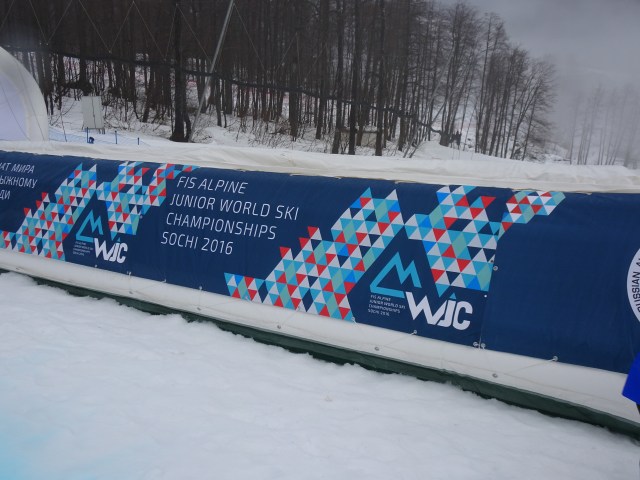
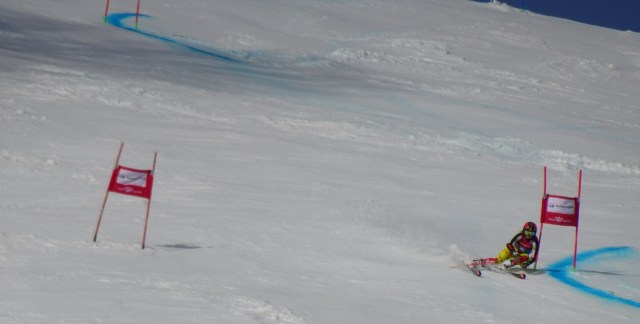
We’ve hit the mid-point of the 2016 FIS Alpine Junior World Ski Championships, switching from the speed events to tech. The ladies Giant Slalom events were held in the continuing warm spring-like conditions, but the race committee worked hard to keep the track in good shape for the larger fields that now participate.

It was a memorable day for the Swiss, taking gold, bronze, 4th and 10th and a narrow 2-point lead over Austria in the Marc Hodler Cup which recognizes the leading nation in the junior ranks. Canada sits 4th, the US 6th.

While the Marc Hodler Cup offers a glimpse of what to expect in future years on the World Cup as the talented athletes of the junior work through the transition to the World Cup, it also decides ranking in the Nations Team Event and team size at the Youth Olympics. So it is important to not only pay attention to results within the top 10 (points are only awarded to top 10) and keep an eye to team size. (Marc Hodler Cup standings: http://data.fis-ski.com/dynamic/marc-hodler-trophy.html?seasoncode=2016&sectorcode=AL)

But let’s talk about legacy.

General media commentary about Sochi has created the impression there is no legacy from 2014. From the alpine ski perspective, this could not be further from the truth.

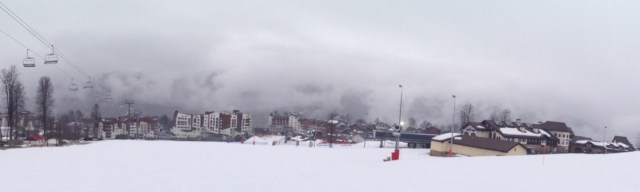
Rosa Khutor is one of Russia’s largest ski resorts. According to our hosts, they operate pretty much at 100% occupancy. And we are seeing enormous crowds on the slopes. Daily visitation runs 7,000+ and after 10:00am every day the runs are so busy it is just not fun to go out for a ski. (fortunately, we get lift access at 7:00am, with empty slopes, so we are a little spoiled).

There are plans to expand the ski terrain of Rosa Khutor with lifts already in the final stages of construction.

The free-fall of the Ruble makes most purchases here pretty cheap. The Canadian dollar goes a lot further here than central Europe. We are told this is one of the main reasons for such robust skier visit numbers. The exchange rate has made the “staycation” a necessity within Russia. Canadians can commiserate.

The infrastructure remains in-place for all events. The extensive snowmaking system ensured we have ample coverage which has been needed with the warm temperatures.

Organizational capacity remains strong – these are not the Olympics, so the people power is reduced, but ample. It would be great if the ski skill of course workers matched those of the Russian Ski Team, but the old champions of their team are in senior roles with the Federation – so it will just take a little time before the investment into their athletes starts to well-up within the system.

We’ve faced some pretty challenging weather conditions here in the Caucuses and the organizers are meeting every test. The FIS Race Directors asked for applause from the coaches at this evenings Team Captains meeting to recognize the hard work done to marshal the program through the speed events.

Russia has seen some reduction in the general financial support to their ski teams post-2014, but according to Urban Planinsek, Alpine Director for their alpine ski team, the core investment remains in-place and the goal to keep building within the alpine ski program is there. “The sport authorities in Russia understand it is a long-term investment in a sport like alpine skiing. We are fortunate to have an athlete like Alexander Khoroshilov, but it will take time to build new champions.”

The purpose of bidding for the 2016 World Juniors was to keep the expertise and capacity built from the Games alive. But Russia would also like to be considered a candidate for future World Cup events and running major events is the best way to gain attention of the FIS professional staff.

So from a commercial perspective, alpine skiing is alive and well. From the competition perspective, the Russian Alpine and Snowboard Ski Association is making all the right steps to present their capability to the ski racing world.
IMG_1208

Posted in 2016Sochi, Ski Racing, World Juniors | Tagged , , , , , | Leave a comment

World Juniors Update: A long, tough day


DSC02163

The Alpine Combined is always a long day on the snow.

This was the first time the full AC was held at the Alpine Junior World Ski Championships, as the past two years in Varna and Hafjell were a hybrid of the actual Super G World Championship in run one and then the alpine combined slalom.

With the new priority to this event to ensure to remains in the Olympics, the Sochi organizers to offered additional days in the program to run the alpine combined as a stand-alone event.

Coupled with spring-like conditions, the rough courses and challenging hills profiled strong skiing. But a moment’s indecision or lack of focus to the line, pushed up the DNF rate.

The super G track was sharply different between the top half and bottom. The upper slope was icy, but transitioning thorough the “Russian Trampoline” with the course set directly down the fall line in the face of a blistering sun (we moved up to +14c today) the course rutted badly. Heavy salting of the course helped raise the finish rate somewhat for the men who ran after the ladies on the same track.

The slalom leg was held on perhaps the steepest slope ever used for a Junior Worlds. It faced directly north so the snow kept fairly firm, but the long day and rapidly softening conditions took a heavy toll on the finish rate. In the end, only 23 of the 73 starting finished in the men and 23 of 53 in the ladies.

The organizing committee stepped up and did a great job under very difficult circumstances to pull off both events.

Only two Canadians made it to the finish in the Super G, with Jack Crawford placing 6th and Jeffrey Read 26th. Crawford then placed 11th in the slalom leg to finish the day in 5th place. Read did not finish the slalom.

One important note: for those who think the alpine combined is “on the way out” – not true. It is, in fact, part of the Olympic selection process to determine quota for nations who will compete in PeyongChang, as are the other four events of downhill, SuperG, Giant Slalom and Slalom. An additional special quota lift is also available to nations qualified in the new Nations Team Event. A World Cup title will be awarded this year (there must be 3 events on the calendar) and there are Nor-Am spots available to qualify for World Cup. So rumors of the demise of the Alpine Combined are simply that – unfounded rumors.

Tomorrow the ladies race Giant Slalom. Sun and continuing spring-like conditions are forecast.


Posted in 2016Sochi, Ski Racing, World Juniors | Tagged , , , , | Leave a comment

World Juniors Update: Silver!

Day 3 dawned with clear skies again and hard early morning snow, but the impact of the sun on the “Russian Trampolone” section meant early start numbers ruled the day.

In last nights’ team captains meeting, Mens coach Johnny Kucera saw #1 was available, so grabbed it. Jack Crawford made good use of tactics as he then blistered the track to grab World Championship silver.

Crawford’s SuperG medal is the first event medal won by the Canadian men since 2006 (Stefan Guay – GS gold).

Kelby Halbert (2010) and Phil Brown (2011) won bronze in the combined (which was the combined results of DH, GS and SL – this event is now run as a separate race with SG and SL). Canada also won a bronze in the Nations Team Event in 2012.

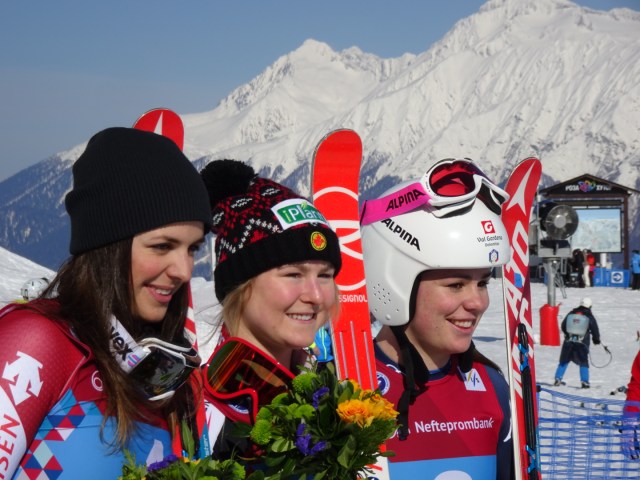
2 1/2 hours later, Val Grenier made it a complete set of Junior World Championship medals, with her own aggressive attack that landed a mere .07 behind Nina Ortlieb, daughter of 1998 Olympic Downhill Champion Patrick Ortlieb.

Tomorrow is the busiest day of the Championship with both Alpine Combined events, or four race runs. Clear skies are forecast to hold, but temperatures are headed to spring-like levels

Posted in 2016Sochi, Ski Racing, World Juniors | Tagged , , , , , , | Leave a comment

World Juniors Update: Defining excellence

opening

After a brilliant opening to the 2016 World Juniors, day 2 dawned to the forecast rain and fog. The FIS Race Directors wisely spurred the men out for a very soggy inspection of the track, to permit a jam-packed program to work for tomorrow.

Monday will include a quick inspection, men’s race at 9:00am, followed by reset, inspection and race for the ladies.

A lay day enables time to reflect.Why is a Championship for juniors important? What benefits does an event like this bring in the long journey towards the highest levels of our sport?

Over the ten years I’ve Chaired the FIS Alpine Youth subcommittee which oversees the FIS Alpine Junior World Championships, it has been great to see how the event has been elevated in importance by National Ski Associations, by organizers and by athletes.

A little history

First, let’s talk about organization. The quality of the Championships has risen, year-over-year as host use this event to lift the skill of their people, source infrastructure resource or as a stepping-stone to the major events.We’ve seen television emerge, starting with one event in 2010 to every race on Russian TV this year. The staging is impressive with all the standard ceremony expected of a World Championship.

Here’s a snapshot of the past ten years:

  • Our current host, Sochi, is hoping to use the 2016 Championship as a springboard to get on the World Cup calendar, making good use of their 2014 legacy and organizational experience to profile their capabilities.
  • Last winter, Hafjell’s objective was to prepare their committee for the hosting of the 2016 Youth Olympic Winter Games.
  • 2014 hosts Varna (Slovakia) positioned the event to bid for a return to the World Cup by demonstrating they had the new infrastructure, slopes and passion to be a fixture on the senior tour.
  • Quebec (Mt St-Anne and le Massif) hosted in 2013 with excellent organization, but sadly the speed venue which has always offered such promise now sits unused – and unavailable to ski racing.
  • In 2012, Rocarasso (Italy) was an infrastructure play following the major earthquake in the region outside Rome.
  • Crans Montana (Switzerland) used the 2011 Championship to fine-tune their organization, communities (there are five to coordinate) and investment to bid for a return to the World Cup – and are now an annual fixture on the Tour.
  • 2010 profiled the Region Mont-Blanc, a partnership of Chamonix (slalom), les Houches (dowhill and GS – site of the World Cup races) and Megeve (national speed training venue for the French Ski Federation).
  • Garmisch used the 2009 event to train their organizing committee in advance of the 2011 World Championships.
  • Formigal (Spain) hosted in 2008, using the Championship to profile one of the largest ski resorts in Europe.
  • Austria hosted in 2007, using the combined resources of Zauchensee (national speed training centre and World Cup venue) and Flachau (annual ladies World Cup slalom venue).

Looking forward

The calendar for next three years is already confirmed. Aare, Sweden hosts the 2017 Championship, using the strategy of Garmisch to train their people and test their venues in advance of the 2019 World Championships. Davos, Switzerland takes centre stage in 2018, followed by Val di Fassa/San Pelligrino, Italy in 2019.

Why are the junior championships important?

When asked why should an athlete attend the World Juniors, I give two key reasons.

Events like the World Juniors are important in preparing a young athlete for the big events – the senior World Championships or Olympic Winter games and even managing a World Cup at home. This is a major event with training wheels – TV is becoming ever more present, the pagentry is the same a as a World Championship, crowds are present but not overpowering, the competition pressure is there but not as intense. It is a stepping-stone in preparing for the big leagues. There are all the attributes of a major event, but on a manageable scale. There is pressure, but within an age range (junior). Media is present, but not pervasive. The presentation, positioning and profile of the event is like the big event, but without the pressure-cooker environment. So a great place to learn.

The other main reason is benchmarking. Every leading ski nation takes the World Juniors very seriously. This is the focal point of the year for their junior programs. Each of these National Ski Associations are investing heavily into their future potential, knowing that the athletes attending today will form the backbone of their National Teams within a few years.

The success of Norway on the senior tour is no surprise to those of us watching the World Juniors. Norway has captured the Marc Hodler Trophy, the Nations Cup of the World Junior Championship, in four of the last six years. the emergence of a young wave of talent was already on display at the World Juniors – if you were attending and watching.

As we are at a recent Olympic venue, it was enlightening to look back to see if there is a correlation between Olympic medals and World Junior medals. And of course there is. Of the 25 individual Olympic medalists, 18 were on the podium as juniors.

But what is equally interesting and insightful: who did not medal at the World Juniors. Some of the biggest names of our sport: Bode Miller (did not attend), Dominique Gisin (one top 10), Christof Innerhofer (did not attend), Steve Missillier (one top 10), Jan Hudec (one top 10) and Tina Maze (three top 10 results).

It’s not that surprising. The World Juniors are still early in the athlete pathway and for late developers like Innerhofer. The standard measuring stick used is to aim for a top 10 as an indicator of future World Cup potential.

It’s just a great experience

The first medal ceremonies of these Championship underscored what a great experience the World Juniors can be. It’s pretty special to have the privilege of presenting a gold medal to a World Junior Champion from your nation. To watch the Canadian flag raised and hear your national anthem. For her Team to be present an experience this – which despite our success in winter sport, is still rare to WIN.

Perusing social media today, the pride was evident in the profiling of World Junior success. The Swiss Team “presented” their silver medalist. The US was pretty excited about their Team success in speed.

It’s equally inspiring to watch a race with the parents of other nations. Who have supported their children through the journey, knowing these Championships are the last easily accessible big event for them to watch and enjoy.

Our kids go through many levels on their pathway towards excellence. We want them to get involved in sport so they have clear constructive goals and to develop as individuals. In early years the goal may be a FIS Children’s event like Topolino or Whistler Cup (and there are many more FIS Children’s events in the calendar) or the U16 Nationals. It progresses to the U18 Nationals and then the World Juniors. Suddenly (it seems) the big leagues of World Cup and the Olympics don’t seem so distant.

So it is important to enjoy these moments where you can walk into the medal ceremony without security, without a ticket – and are encouraged to get up front and take a picture – mix and mingle with the Teams. It’s fun, it’s relaxed. But it is important to the athletes here. This is their season focal point, their highlight of the season. And memories they will carry with them for a lifetime.


Posted in 2016Sochi, Ski Racing, World Juniors | Tagged , , , , | 1 Comment

World Juniors Update: Bulletproof

IMG_1052

The Western Caucasus mountains were in their glory this morning. Majestic white pinnacles against the blue cloudless sky. A great day for downhill.

The clear night and spring-like conditions meant the race track was firm and fast for the opening races of the 2016 Championships.

With a running time of just over 1:10, while short, there is quite a bit packed into this downhill. Set by former Canadian coach Urban Planinsek who now leads the Russian Alpine Team, he used the entire hill with a set that swung rhythmically and continuously from start to finish. A moment of inattention and you are off the course. The key section is the “Russian Trampoline” which traverses below the gondola in a blind approach before the hill plunges away into a round-house turn which opens the track to the lower reaches of the race course. Aggression and precision were key.

The surface started hard, but softened as the sun warmed the track. One reason for the early start with the first athlete on the course at 9:00am.

It was certainly North America’s day.

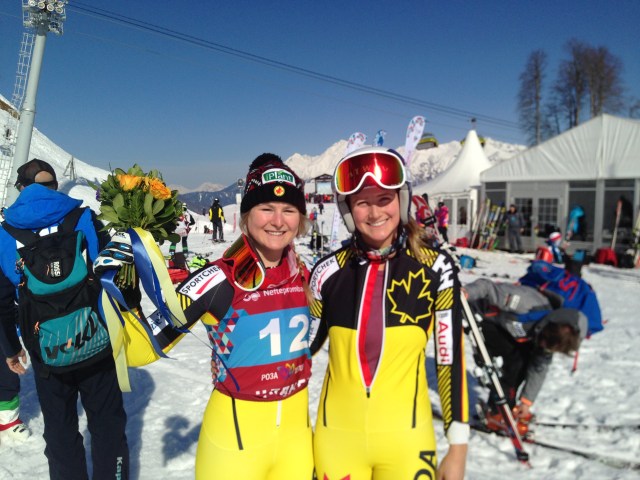
In the ladies race, Canadian Valerie Grenier made good use of her World Cup experience with rougher tracks to ski from a relatively high start position (#12) to scoop the gold. Grenier adds to the World Junior superG bronze from 2015. Stefanie Fleckenstein of the BC Ski Team placed 20th.

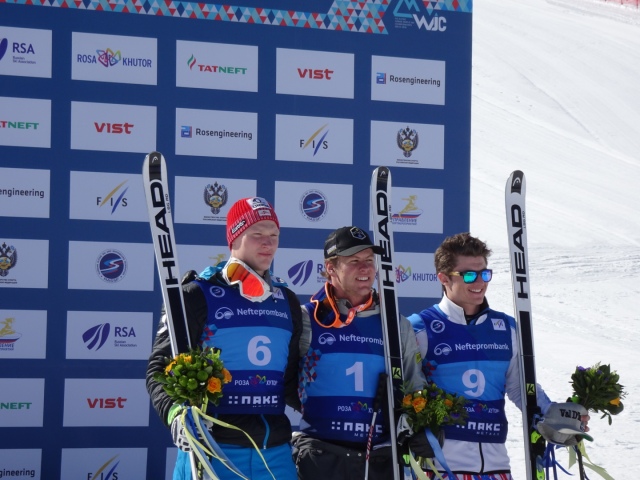
Emphasizing that early numbers were the key, American Erik Arvidsson blistered the course from position #1 to take the gold – a nice birthday present to his father, Par (who was in the crowd of parents attending). It was a stellar day for the US, placing four athletes in the top 10.

Result for the Canadian men: Brodie Seger (13th), Jack Crawford (14th) and Jeffrey Read (28th).


IMG_1063IMG_1069

IMG_1070


Posted in 2016Sochi, Ski Racing, World Juniors | Tagged , , , , | Leave a comment

World Juniors Update: Ready, set ….

M

The skies cleared early this morning allowing training to get underway. Thanks to the hard work of the volunteers and course workers, with a pinch of salt the track was ready to be tested – same track for ladies and men.

This World Junior downhill uses the middle sections of the Olympic downhills from 2014, starting several hundred metres down the track from the men’s start with a finish above the final schuss.

Only one training run, with the first medal events of the Championships tomorrow: the downhills. All events are to be televised live to Russian TV, with top-to-bottom coverage and a on-site large screen for spectators.

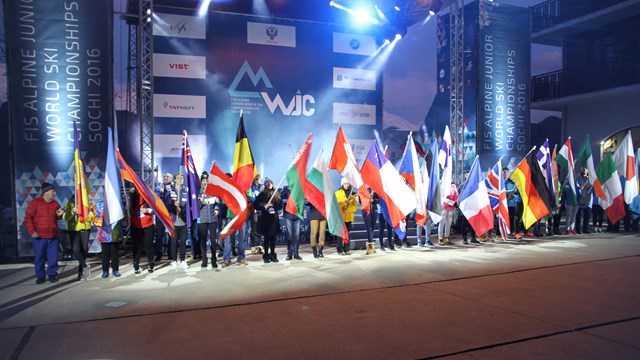
This evening the Championship officially opened to a large crowd of athletes, coaches, parents and officials in the town centre of the Rosa Khutor ski resort with the usual pageantry – the Hajfell organizers passing the FIS flag on to the Sochi committee – the parade of athletes and customary speeches – all kept to a very tight timeline out of consideration to the athletes who have a very busy 10 days of racing ahead.

Tomorrow morning, 9:00 am sharp the first athlete leaves the start.

Sochi is GMT+3 or two hours ahead of central Europe.


DSC01927

DSC01954


Posted in Uncategorized | Leave a comment

World Juniors Update: A Bit Moist

IMG_1029

Rain was predicted for 6:00am and unfortunately the weather forecaster was bang-on. Throughout the day, the upper mountain was blanketed with heavy snow, with a steady downpour on the lower mountain.

So no downhill training today.

For the record, 17cm of snow accumulated on top , 29mm of rain in the village. This evening, cannons are blasting (they report there are 70 of them to ensure the slopes are secure from avalanches) and the precipitation has let up.

But there is good news. The weather forecast for coming days is for bright sun and spring-like conditions. Organizers are working the piste to maintain the track surface under the watchful eyes of FIS Race Directors Peter Gerdol (men) and Janez Flere (Ladies).

The program remains in-place, with one training run tomorrow, the Opening Ceremonies in the evening and the first races of the 2016 Championships Saturday with ladies and men’s downhills.

IMG_1013

Posted in Ski Racing, World Juniors | Tagged , , , , | Leave a comment

World Juniors Update: Welcome to Sochi

Sochi-Olympic-Park-08-02-14

White peaks framed the final approach to Sochi International airport, as the Swiss charter flight made the final approach into the 2014 Olympic city. For the next ten days, the alpine ski venue of Rosa Khutor, nestled in the western Caucasus Mountains that surround the Black Sea city, will be our home.

180 of the worlds best junior athletes have gathered for the 2016 FIS Alpine Junior World Ski Championships, using most of the competition slopes from the recent Olympic Winter Games.

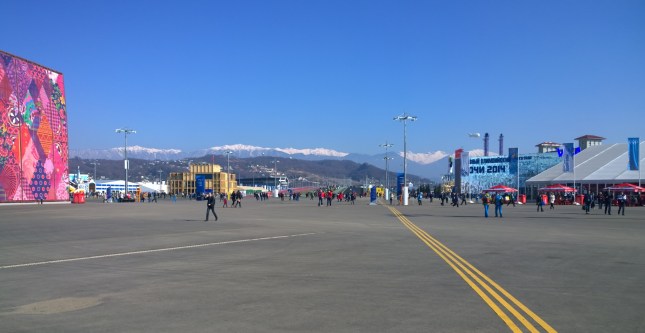
There is always a lot of chatter about legacy following the Olympics. Well let’s set the record straight: the legacy is alive and well in Sochi. We’ve dropped into high season, with more than 7,000 skiers and boarders per day on the slopes mid-week and an expected 12,000 per day on the weekend. Those are numbers that resorts like Whistler or Vail post.

There is no shortage of snow. The region has managed the erratic temperatures that have swept across Europe this winter through mobilizing their extensive snowmaking system, which coupled with Mother Natures bounty means they boast a snow depth of 3.5 metres on the trails.

But we are here to race and are hoping for clear skies.

This edition of the World Juniors is the first to use 10 days to complete all events. Last year, the Organizers in Hafjell, Norway miraculously jammed five events per gender plus the Nations Team Event into seven days. The Sochi organizers delivered a program that permits breathing space for the necessary training on the downhill – which is a good idea when working with juniors – and each day dedicated to a different event.

While the top junior athletes often make a mark on the World Cup Tour, such as last year’s double gold-medalist Henrik Kristoffersen, most athletes have focused their competitive efforts to the five Continental Cup Tours, which are the training ground to prepare for the senior circuit: Europa Cup, Nor-Am Cup, Far East, Australia-New Zealand Cup and South America Cup. A few athletes have moved over from the just completed Youth Olympic Games. And for some, this is their first exposure to a major international competition.

Experience. Too often overlooked. This  is one of the main goals for any National Ski Association or Team: to provide invaluable experience and development at a World Championship. All the pageantry is here, but without the media glare and crushing crowds. Recent World Junior venues were proving grounds to return a resort to the World Cup (Crans Montana), upgrade a World Cup venue (Chamonix), train future World Championship organizers (Garmisch) or Youth Olympic organizers (Hajfell).

Next year, the Junior Championship moves to Aare, Sweden as part of their preparation for the 2019 World Championship (and they also organize annual ladies World Cup events). So an exceptional opportunity for any junior who may well qualify for the senior championships to get invaluable experience on the tracks – that otherwise can only be earned through the 2018 World Cup Finals (only top 25 in World Cup) or a World Cup race.

But starting Saturday through March 5 the focus is Sochi/Rosa Khutor. A return to an Olympic venue. A possible preview for a future World Cup bid. A chance for Russia to showcase their newest ski venue to the world.

FIS Alpine Junior World Ski Championship Programme

Saturday, February 27 – Men’s and ladies’ Downhill

Sunday, February 28 – Men’s Super G

Monday, February 29 – Ladies’ Super G

Tuesday, March 1 – Men’s and ladies’ Alpine Combined

Wednesday, March 2 – Nations Team Event

Thursday, March 3 – Men’s and ladies’ Slalom

Friday, March 4 – Ladies’ Giant Slalom

Saturday, March 5 – Men’s Giant Slalom

Link to the World Juniors web site: http://www.rassfevents.ru/en/events/fis-alpine-worldjunior-championships-2016.html


Posted in Ski Racing | Tagged , , , | Leave a comment

C’est cool!

Journal De Montreal – November 29, 2015

Une autre représentante de l’unifolié a réussi à obtenir un classement. À sa première Coupe du monde, Laurence St-Germain, de Saint-Ferréol-les-Neiges, a conclu en 27e position, avec un temps de 1:48,66.

«Elle a étudié à l’an dernier à l’Université du Vermont, tout en compétitionnant, a raconté Gagnon. Elle s’est taillée une place au sein de la formation canadienne et s’entraîne avec nous depuis cet été. C’est “cool” de voir qu’elle est capable d’étudier et de bien performer.»

Another representative of the Maple Leaf managed to get a ranking. In her first World Cup, Laurence St-Germain, St Ferreol-les-Neiges, concluded in 27th position with a time of 1: 48.66.

“She studied last year at the University of Vermont, while racing, said Gagnon. She has earned a spot on the Canadian team and is training with us this summer. It’s “cool” to see that she is able to study and perform well. “

Link to full article: http://www.journaldemontreal.com/2015/11/29/marie-michele-gagnon-en-veut-plus

Posted in Uncategorized | Leave a comment

A legacy of champions

In 1968 three dedicated supporters of ski racing came together to offer their support, so Canada could think about podium success in the upcoming Olympic Winter Games of Grenoble.

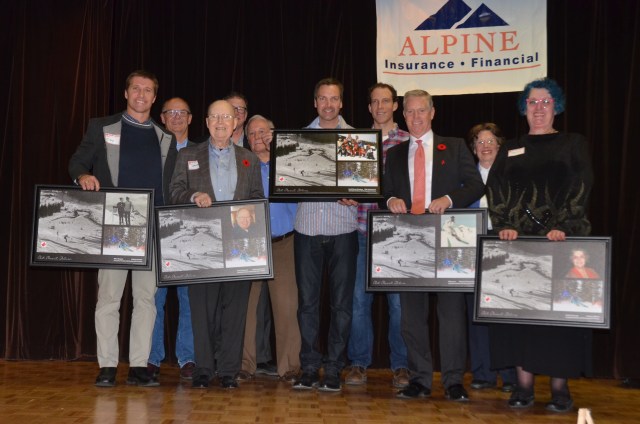
Fourty-seven years later, the legacy of Allister Ross, Joe Irwin and Jock Osler is alive and well, celebrating new inductees into the Canadian Rockies Ski Racing Hall of Fame alongside introductions of the newest generation of young champions from western Canada.

“Events such as the Return of the Champions are so important” said Alberta Alpine President Nigel Loring. “Giving the ski racing family a chance to celebrate the builders of our sport and recognize our athletes before we get tied up stringing b-net and running races, is so important. Our builders have laid a solid foundation, which has served our clubs for generations, and this is why we have a steady wave of athletes that make us proud are on the podium.”

The robust crowd of more than 400 who gathered at Calgary’s Petroleum Club last week for the annual event actively participated in the many items offered.

All funds raised from the Return of the Champions are contributed to Alberta Alpine’s programs of excellence and to supporting the Alberta Ski Team. As the parents of athletes run this event on the Alberta Ski Team, there are no overhead costs, so 100% of the proceeds are spent on the snow.

“We had a number of excellent nominations for the Class of 2015 to consider for the Canadian Rockies Ski Racing Hall of Fame,” said Nominating Committee Chair, Ken Read. “The reaction from around the world, yes – around the world –acknowledging the contribution of our Honoured Inductees was phenomenal. It is important that we recognize what Mike Irwin, Phyllis Kennedy, Jack Sandercock and Mike Wiegele have brought to our community and our sport. We celebrate them and we also celebrate what they have built. And in the words of Jack Sandercock, ‘our sport is giving every young ski racer the essential tools to be successful in life’. And we want our athletes to meet these people to appreciate this incredible legacy, and to build on it.”

Alberta Alpine and the Friends of Alberta Ski Team thank the sponsors, supporters and all who attended the 47th “Return of the Champions”. The continued great support of the ski racing family ensures we provide the best programs possible for our athletes at every level throughout the province and western Canada.

Posted story: http://albertaalpine.ca/2015/11/24/giving-back-return-of-the-champions-canadian-rockies-ski-racing-hall-of-fame/

All_Honoured_Inductees2_best


Posted in Uncategorized | Leave a comment