It Takes A Village

Bosinger-Cheque-Webster

The road to the top is a long one. In ski racing, it is particularly difficult. It’s actually much more than the reported 10 years or 10,000 hours of intense practice or skill acquisition (Ericsson et al).

With each day, each season, we see a tremendous investment made in our athletes so those crucial days of training are not a fearsome barrier but are a way to learn, enjoy and build. Volunteers, officials, coaches, parents all tirelessly share their precious time to make our sport better, programs stronger, a training day more productive.

This, is our community. Our family. It is what makes us strong. The ski racing family is probably the single greatest reason for our success.

We see evidence of it everywhere.

Earlier this week a dedicated group gathered to support a young FIS level athlete, Ryan Webster. Ryan’s immediate goal is to ski well enough this season to meet the performance standard for the Alberta Ski Team.

The Webster family are a pretty typical ski racing family. They work hard on and off the hill. Ryan’s father, Sandy, is the Alberta sales rep for Volkl skis. He serves on the Board of the provincial ski association and is Race Chair for several FIS competitions in the province. These are his ‘official’ duties, because Sandy can be found at pretty much every FIS race in the region, helping out somehow. His mom Irene and brother Cameron are always out volunteering throughout the season.

As expected, the ‘ski family’ gathered at the Garrison Pub to lend their support, bidding generously on a range of items gathered from the ski and sport industry, to help raise much needed funding to support Ryan.

And the pleasant surprise: the Rob Bosinger Memorial Trust contributing an unexpected $3,000 to top up the silent auction proceeds. And their kind words: “honoured to give back to a family who has given so much to alpine skiing.”

This is our family. We step up to help each other.


Posted in Uncategorized | Tagged , , , , | Leave a comment

MIKE WIEGELE – HONOURED LIFETIME BUILDER – CANADIAN ROCKIES SKI RACING HALL OF FAME


November 3, 2015

_mike_wiegeleIf passion for skiing is the critical difference in success in ski racing, then it is no wonder Mike Wiegele mentored three World Cup winners and established two enormously successful ski clubs. With his infectious cry of “Let’s go skiing!” for over fifty years Mike has been shaping ski racing and winter sport in Canada.

Emigrating to Canada in 1959 from his native Austria, who could have known that less than twenty years later one of his young Canadian protégés would return to win a World Cup downhill in Schladming, not far from his native Kärnten. Through his leadership of both the Lake Louise Ski Club and founding of the Bow Valley Quikkies and Banff Alpine Racers, Mike had direct influence on three Canadians who scored 26 World Cup podiums, including 8 victories as well as a very long list of athletes who had successful careers with the Canadian Alpine Ski Team.

When you speak with Mike about ski racing, you see enthusiasm shine in his eyes. “When I raced in Austria and later in Canada, I always went skiing after the race was done. At the end of the season, my friends would call me up to come to the year-end banquets, where I would receive all these trophies, because I had missed the awards ceremonies as I was out skiing after every race. I just loved it so much!”

His eyes were set on western Canada, but his racing and instructing initially took him away to more active ski communities. Mike worked with the legendary Ernie McCulloch at Mont-Tremblant (1960) and raced in the United States with ski racing greats Billy Kidd, Jimmie Heuga and Buddy Werner. But armed with some good advice from Hannes Schroll, Director of the Sugar Bowl Ski School in Lake Tahoe, California found Mike headed back to Canada (Mike was working in his ski school at the time). “He asked me “what do you want to do?” and then shared with me “If you want to leave your mark on this sport, go back up to Canada. Find yourself a good mountain with deep snow. And develop that.”

So in 1966, Mike became the Founding Director of the Lake Louise ski school where he also established a racing program. It started a life-long partnership with his wife Bonnie that would transform Canadian ski racing. “Bonnie and I loved to work with kids”, continued Mike. “With her gymnastic and syncro swimming background, we could offer a multi-sport training environment which helped with the regular dryland program. We knew kids loved to go fast, so we focused on giant slalom and downhill, particularly the fundamentals of downhill because we had a great hill to work with (Lake Louise). We were never afraid to stand up and fight for what is best for a youngster.” And the goal was to instill a core passion for skiing. “You have to love skiing more than racing,” added Mike. “That’s what drives you to get out there on your own, no one to argue with. To develop that line and the feeling for the flow, that’s what makes you successful.”

“When I first came to Canada, I could see the shortcomings in organization” said Mike. “It was a real uphill battle as we didn’t have role models or a legacy of winners like the Austrians. But what we did have was great parent support in the club. I could rely on an amazing group of families to run the races and support the club. That made up the difference”.

Firmly establishing the philosophy of ski racing excellence within the culture of two of Canada’s leading ski clubs has left an enduring legacy of excellence. “It’s a cycle” says Mike. “I wanted to be sure every youngster loved skiing. From this, I knew they would be motivated to be better. And I always wanted them to respect the sport and the mountain. We balanced the mix between gates and free-skiing so we could ski all day. These, are the fundamentals of skiing.”

Not many coaches working at the club level have the chance to work with three athletes that found success on the world stage. “I could see the fundamentals when they were developing” said Mike. “They worked hard, skied smart and listened. I would tell them what to do and the next run, they would do it. And they all loved to ski.” When asked what he felt when each won on the World Cup, Mike went very quiet for a moment. Then, with emotion in his voice he simply said “awesome, just awesome.”

From ski schools and ski racing, Mike harnessed that passion towards his next venture, founding Mike Wiegele Heli-Skiing, which has brought the spectacular beauty of the Caribou-Monashees to thousands of powder enthusiasts. The family owned operation is now led by his daughter, Michelle. He continues to support ski racing in Canada as a sponsor of the Canadian Alpine Ski Team, offering end of season skiing to successful members of the Team. And it’s not unusual to find an Olympic Champion, such as Marcel Hirscher, dropping in for some epic powder days.

Alberta Alpine and the Friends of Alberta Ski Team congratulate Mike Wiegele for his induction into the Canadian Rockies Ski Racing Hall of Fame as an Honoured Lifetime Builder. Join us to recognize his contribution to alpine ski racing at the 47th Return of the Champions at the Calgary Petroleum Club on Tuesday, November 10th. The “Return of the Champions” is an Alberta Alpine event. All funds raised are to support athlete development and Alberta Alpine programs.

Original posting: http://albertaalpine.ca/2015/11/03/mike-wiegele-honoured-lifetime-builder-canadian-rockies-ski-racing-hall-of-fame/

Photos courtesy Mike Wiegele

Posted in Uncategorized | Leave a comment

What do the experts say? Integrating Canada’s high performance sport and education.

terweil1

As we continue to examine ways to build the “Gold Medal Pathway” for athletes in Canada, the question has been raised about working with the Canadian Inter-university system (CIS) and sport schools or academies. Two studies have been undertaken fairly recently in Canada, examining how our education system works with High Performance Sport.

The broader review was undertaken by Own the Podium (OTP) at the request of the Minister of State for Sport (at the time) Gary Lunn. A panel made up of sport experts and organizations including OTP, Canadian Inter-University Sport (CIS), select National Sport Organizations and Sport Canada examined the relationship between the CIS and Canada’s High Performance System.

The study acknowledged the gap that now exists between Canada and our prime competitors in international sport: “what was once a pre-eminent example of a successful marriage of education and sport has stalled. Both the Canadian High Performance Sport System and Canadian Interuniversity Sport (CIS) have failed to keep pace with improvements in other nations’ athlete development system.[1]

And some of the recommendations developed by the Panel included:

  • Creation of a clear athlete development pathway through CIS to National Teams
  • Establishing training & development sport academies to work with the school system and act as a feeder system
  • Full commitment of the NSO is essential to build a successful program pathway through academies and CIS

In the meantime, as we saw repeatedly during the Pan-Am Games, many Canadian athletes reside within the NCAA world. Our international success in many sports remains tied to an external organization.

Prior to the CIS Review, the OTP winter sports group undertook a review of international sport academies which focus on high school years, visiting Stams, Austria, Engelberg, Switzerland and Berchtesgaden Germany and gathering information from the US and Canada. Here are several of the conclusions of the study[2]:

Germany, Austria and Switzerland have aggressively promoted the importance of developing sport academies to maximize the development of athletes. It is quite evident that athletes attending these sport academies have been and will continue to be better prepared for success at the international level than their Canadian counterparts. Additionally, a striking difference between the Canadian and European model is the effective integration between all key partners: NSO, PSO, school, integrated support team (strength & conditioning, physio, medical, sport psych, nutrition, etc.) and facility operator.

The Canadian sport system must assess our financial investment into sport and determine whether or not a greater amount should/could be allocated to global or multisport projects such as sport academies.

Regardless of our investment into Winter Gravity Snowsports (alpine, freestyle, snowboard), it is unlikely Canada will increase the number of Olympic medals won on a consistent basis, without significant investments into the development of well-integrated junior development programs

CU-700x474

So who pays? Funding the Sport and Education Pathway

We’re all acutely aware of the financial challenges currently facing our sport in Canada. Calling for a national discussion about a sport and education pathway is not a call for funding. Our sport leadership is not in a position to take on additional financial responsibilities at this time. The objective is to stimulate discussion and action, to bring together experts and keenly interested leaders. To plan, share information and build a plan costs nothing. Any plan can only be built with available resources.

So the call for a discussion is to explore ways Canadian ski racing could better coordinate the very significant investment made by US and Quebec Universities into Canadian athletes on their varsity teams alongside the additional investment made by each athlete and in most cases, their family. The investment is already in-place. From schools and the athletes. Support varies widely, but don’t underestimate value of an NCAA athletic scholarship or the contribution already made by each individual athlete. This investment gives recruited athletes a program that allows them to maintain – and with support – continue to improve.

The recently released ACA Strategic Plan projects: “(We have) created educational pathways and partnerships to enable those athletes who want to train and study to remain in the sport.” So if Canadian ski racing is serious about building an inclusive world-leading athlete pathway, then it follows that an action plan is not only necessary but given the numbers of Canadian elite athletes now choosing this path, a priority.

The scope of the NCAA/Quebec Universities investment is staggering when we consider the number of Canadians that benefit. One hundred percent of it comes from schools and the athletes. So it’s not funding that is needed. It’s connectivity: knowledge, contacts and understanding. And from this starting point, putting in place an action plan built on available resources, to incorporate this newer dimension of our high performance sport pathway to enhance opportunities for all athletes though greater depth in our events and in our programs.

The Gaps: NCAA varsity programs can’t do it all.

One inquiry I received questioned why “the system” needed to provide any support to student-athletes. (“If the NCAA is such a fantastic system as you repeatedly point out, then the athletes who don’t make Ski Team criteria and end up going to school should have every opportunity to perform and re-qualify for the ski team.”).

This is why it is important to connect on the snow: go to races, meet the coaches, watch the events and network with the system – to understand how it works. NCAA ski programs are very good and very committed, but have limitations. You need to know the rules that govern the amount of athlete-coach contact, periods of training, clear and very strict rules about financial and sponsorship support within the NCAA environment.

The gaps vary, but in general, student-athletes seek peer group training, spring/summer dryland & strength and conditioning guidance, summer and autumn on-snow training opportunities and management at events not supported or attended by the NCAA coaches as they cannot attend all FIS events.

NCAA athletes who are keen to maintain their competitiveness seek ways to fill the gaps. Provincial Ski Teams of BC, Alberta, Ontario and Quebec have been actively supporting their alumnus athletes. Others join for-profit elite programs. Many link up to train independently.

We have a window of opportunity with so many athletes having chosen the NCAA option (those in school and recent graduates). Although serendipitous, we have accomplished a fundamental element of the Gold Medal Pathway: retention of our elite athletes, which builds the competitive pool of the Nor-Am Tour. They are still ski racing. And if they are ski racing, they have medal potential.

But we’re not doing our best to harness this potential in a way that lifts the Canadian system for all athletes.

Where next?

Shifting the Canadian education paradigm is not going to happen quickly. But, one always hopes there is a will to try inside the CIS, especially with new leadership now in-place. There are sport academies and universities in Canada that are keen about winter snowsports. We need to support them: Lakehead University, Université Laval, McGill, Université de Montreal, Gatineau-Ottawa, UNB, National Ski Academy, National Sport School and I am sure there are many more. We need a comprehensive screen to determine where the programs are and where there may be potential interest. Bottom line: there is a will to develop a better relationship between academic institutions and sport, to attract student-athletes who are seen as valuable contributors to the diversity of the school culture.

Fortunately, while we work on re-establishing wintersport athletics within the CIS, the NCAA is an existing, incredible option for athletes in alpine and cross country. (Note: and the USCSA for alpine, cross country, snowboard and freestyle) We can harness the NCAA and student-athlete investment to strategically and tactically lift Canadian ski racing, lift our competitiveness, continue to deepen the Nor-Am circuit and inspire our entire ski racing system. And NCAA ski racing is growing. A second tier of racing was added to the Carnival program in the eastern US last season and several schools have applied to join in both east and west or are considering re-establishing programs.

We need to come together to establish the framework for our system: create an Education Committee. Build an inclusive committee that brings together experts, representatives of the schools, coaches and experts to help guide and inform the NSO and PSO’s. Coupled with a clear Sport and Education Strategy this will have an enormous impact on every single ski racing family in the system, from U10 to the National Team. It sends a clear message to every family: we care about your future as an athlete and a person.

Cross Country Canada is already there, having established a Board Committee in 2014 which has reported and recommended new policies and a strategy to begin harnessing this potential.

Most important: It’s time for a little inspiration for the current crop of high performance athletes who are pursuing the education option but ready to put in the hard work to remain competitive …. we can keep this generation energized and committed to excellence.

This is the fourth in a series of blogs posted to share ideas, information and encourage debate about the role of high performance sport in Canada’s education system. It is focused on alpine skiing, but many Olympic sports share similar circumstances.

If any errors or omissions are noted, please advise the author and the blog will be updated. “To err is human; to forgive, divine” (Alexander Pope, “Essay on Criticism”).

[1] Canadian Inter-university Sport High Performance Program Concept, 2012

[2] International Sport Academy Review. Nick Bass. 2010Note:

The author served as a member of the Panel, representing wintersport.

Posted in Uncategorized | Leave a comment

Perspectives: Debate makes our sport stronger

“Debate, is positive. Every opinion has merit. It demonstrates people care.”

I sense a new perspective has emerged in the sport:education dialogue, which is a very positive development for alpine ski racing. Skiing History recently published an interview with Bob Beattie, which took a long look at the role NCAA skiing plays in our sport.

Beattie does not shy away from clearly expressing his views. The former coach, alpine director and long-time broadcast commentator always has strong opinions about the directions and future of our sport and he is not afraid to be critical. His lengthy service with both University of Colorado and the US Ski Team uniquely positions him as a person with experience.  Bob expresses his concern about the “alarming” state of NCAA skiing in a Q&A with Edith Thys Morgan.

As a Canadian, I don’t agree entirely with his concerns about foreign athletes and the possible demise of NCAA skiing. But Bob has decades of experience. Corporate memory is essential to ensure we do not condemn ourselves to repeating the same mistakes over and over. So this article is a very worthwhile read in understanding where we have come from and how we can thoroughly understand the issues.

I do agree with his opinion that UNI racing and integrating these athletes into a robust development pathway including the National Team program can be a vital tool to lift ski racing.

Here is the link to Bob’s interview: https://skiinghistory.org/news/all-american

Also, consider becoming a member of the International Ski History Association with the benefit receiving “Skiing History”.

https://skiinghistory.org/join

Posted in Uncategorized | Leave a comment

Follow-up: The Sport and Education Pathway.

CU-700x474

My post of August 4th resulted in feedback that prompted further reflection. It appears I was not clear about who finances an action plan for sport and education.

As the purpose of my posts are to prompt discussion and reflection, I would like to take a few weeks to write a response. At present, I’m in New Zealand with primary focus as management support in preparation for the ANC races which get underway shortly. These events will take priority for the next two weeks and I’ll use plane travel to work through the various (very good) questions raised.

I was raised in a household that placed a high value on education. Even in my pre-ski team days, the influence of athletes such as Bobby Cochran and Otto Tshudi, or later after retiring from the Ski Team from athletes such as Scott Hutcheson, Kathy Kriener and many others was enormous – watching them as high performance athletes blending Olympic aspirations while seeking an education, or as student-athletes on the NCAA circuit where ski racing was the pathway to a great education.

On a personal level, I attended university each spring for every year I spent on the Canadian Ski Team, save one. After a decade I had completed 2/3rds of my undergraduate degree and wrapped it up within a year of retiring from sport. I saw going to school in the spring as a part of my high-performance cycle. The mental break away from the intensity of skiing in the first seed.  The break that kept ski racing fresh. I’d do the six-week sessions from mid-May to the end of June and then was ready to plunge back in.

This experience taught me how challenging it truly is to be taken seriously by coaches and the system. Too often the default was the student-athlete was not “serious”.

While serving as CEO of Alpine Canada, I resolved that this discrimination would be eliminated. Our athletic staff implemented a pilot program the summers of 2003 and 2004 with the University of Calgary which offered courses to Team athletes during summer training at Farnham Glacier. One NCAA coach inquired if we would welcome back any athlete who met team criteria – and we confirmed we would. Patrick Biggs (attending Dartmouth at the time) went on to earned a Team spot the following winter and then placed 10th in his first World Cup race in Chamonix, France. The first of many World Cup top 30’s for Patrick.

One senior coach at the time was honest enough to admit he felt the pursuit of education was enough of a distraction that he would not support a student-athlete. As if striving to nail down a World Cup spot wasn’t tough enough already. Stack attitude against you and it basically becomes impossible.

But the good news: this has changed.

The goal of my blog is to stimulate discussion about the emerging pathway for athletes to the Team and World Cup. To seek out ways to support those athletes who still have a dream of representing Canada – who currently attend Laval, UVM, Dartmouth, UNH, UNM, Utah, Denver, Colorado, Montana and several more – and who are prepared to be serious about maintaining their athletic standards while securing their undergraduate degree. There are a dozen or more who want to follow in the footsteps of the pioneers of the high performance student-athlete pathway such as Patrick Biggs, Trevor Philp, David Donaldson and Anna Goodman – who have earned spots at higher levels.

We want the Canadian NCAA athletes to keep racing. We need their experience. They bring depth to the Nor-Am circuit. The are a positive example to the next generation of aspiring young athletes in our ski clubs. They build confidence in mom’s and dad’s across the country who question if they want their kids to pursue ski racing at the cost of a good education – giving them hope that the pursuit of excellence can be a great teacher of life skills and the life of a student-athlete may well be the core training that prepares them for success.

We want to maintain the passion and keep the dream alive.

More thoughts in a few weeks.

“Always work hard on something uncomfortably exciting.”
Google co-founder Larry Page

IMG_0299    

Posted in Uncategorized | Tagged , , , | 1 Comment

When Does Canada Get Serious About Sport and Education?

IMG_6821Throughout the recent Pan-Am Games in Toronto, again and again we heard about Canadian athletes attending NCAA schools. This spring saw some 15 Canadian athletes opt to attend NCAA ski racing programs, in what one US College coach called “a feeding frenzy”.

The chance to combine sport and education is, to be absolutely clear, incredible. A blessing. A privilege. An opportunity!

Having personal exposure to NCAA ski racing programs has been an eye-opener on many levels. First and foremost is the serious nature of sport and education in NCAA schools. This is not ‘basket-weaving’, but a commitment to both high performance sport combined with education. No fluff. GPA’s that typically run 3.5 or greater. Many with 4.0’s. And at schools where good marks do not come without serious commitment. University and College leaders who embrace the student-athlete, seeing the potential of a broader student community and embraces diversity which extends to a wide international reach that includes Slovenians, Croatians, Norwegians, Austrians, Canadians, Germans, Italians, Swiss, French, Chileans, Australians.

NCAA alpine ski racing is just as focused as athletics, football and swimming. Current athletes and alumnus from the NCAA domain are placing in World Cup and World Championship competition. Winning Olympic and World Championship medals.

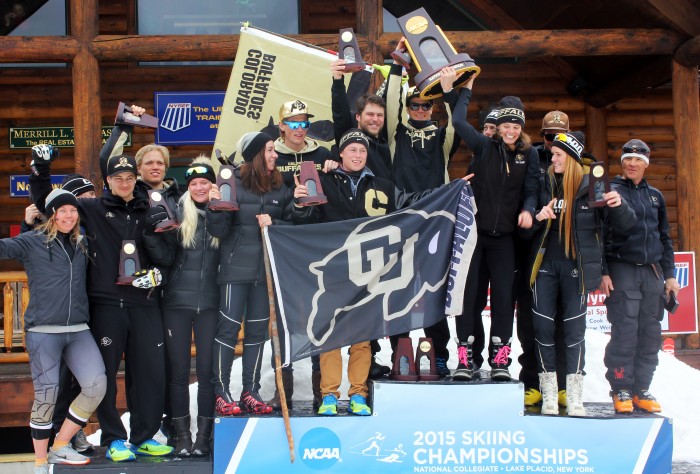
Canadians figure prominently in the current crop, placing 6 in the top 11 of the 2015 NCAA Championship slalom last winter in Lake Placid. (Note: A result that prompted not one mention in any form of Canadian media or web posting).

Another level is patience and how NCAA ski racing can help. Sport is evolving  to more mature athletes. Where once an athlete in their early-30’s was considered in the twilight of their career, today we find mature athletes pushing the boundary of age. Didier Cuche (retired at 38). Patrick Jarbyn (retired at 40). Didier Defago (retired at 38). Benny Raich (age 37) still soldiers on. Current athletes such as Lindsay Vonn (birth year 1984) and Askel Lund Svindal (1982) show no signs of slowing down.

Many sport administrators will quickly point out this stellar list moved directly into the upper ranks of competition without a delay for school. But what is not well-known is several are actually taking classes part-time, keeping their brain cells engaged and chipping away at their post-competitive career options, including one Olympic gold medalist.

A non-education pathway also assumes a smooth ride to the top. The real-life Gold Medal Pathway in alpine ski racing is long, tough and often tortuous. It takes into account the many challenges of our sport: injury, the need to gain experience, physical and mental maturity. A real-life Gold Medal Pathway includes patience  as a fundamental principle.

The marquee athlete of the NCAA pathway is Leif Kristian Haugen. A freshly minted graduate of Denver, Haugen has asserted himself on the World Cup Tour since his final year of NCAA racing and now is ranked 11th in the world in GS. Sharing this spotlight is Jonathan Nordbotten (UVM), Trevor Philp (Denver), David Chodousky (Dartmouth), Olympic double-medalist Andrew Weibrecht (Dartmouth) current World Junior Championship medalist AJ Ginnis (Dartmouth) and many more.

Consider the words of one NCAA ski coach “(my athlete) eventually became so unhappy with a life that only included ski racing that he was not happy and considered quitting. He took a break, went so school and got recharged.”

While patience to allow an athlete to mature should be a foundation of the Gold Medal Pathway,  the concept of retention should also be core. Keeping talented athletes racing, who have already benefited from significant investment by the system, is just common sense. NCAA ski racing compliments this.

One sport organization investigating the education component of the athlete pathway wrote in a recent study, “Nations that are both leading and growing in (our sport) have identified the need to develop the whole athlete in order to retain athletes in sport over the long term – this means education, life skills and athletic performance.”

Many sport leaders seem to forget that the single greatest influence on an athlete are their parents. And what parent in 2015 wants to put the future of their child at risk? The risk I speak of is substantively delaying their education. Sport is risky enough. Why, in the 21st century do we tolerate a sport system (in Canada) that does not embrace and the student-athlete?

Parents in alpine ski racing value sport, but they also value education. Where it can be blended is to be celebrated. To maintain the core commitment of the high performance pathway while also nailing down an undergraduate degree receives hugely positive response.

Canadians are so fortunate the NCAA system welcomes and celebrates our kids. So if some 40%+ of Canada’s high performance ski racers are now in the NCAA system, what’s the issue?

Action, is the issue.

One of the most successful ski racing nations in the world has made sport and education a priority. This is seen in their alliance with Westminster College (now moving into a second four-year renewal) and Dartmouth College. Their training plans accommodate athletes choosing to attend classes, both in the off-season (spring) and for those in full-time programs. They established a National University Team this spring. Age discrimination is addressed through ‘coaches discretion’ to accommodate the concept of patience and allow athletes who choose to manage education or must face the pitfalls of injury, get precious time to mature or rebuild. USSA and the USST are embracing the concept of development of the whole person including education. USSA is engaging their membership, coaches and parents actively through their committee system to debate and reflect on how best to build a strategy. This process has provided the USSA Board with a vision of where they want to go to support and retain their athletes.

(Note: I was not correct in the way I represented the USST Team Selection guidelines and this was pointed out to me – I believe it is now correct)

A real-world Gold Medal Pathway includes educational options and partnerships. It ensures the leadership of a sport actually attend UNI FIS races to understand how the system works, meet the coaches and understand the differences in the various schools. It includes an understanding of the NCAA rules and where the limitations exist for an aspiring high performance athlete in coaching, training and access to support. It includes open-minded leaders who welcome a national discussion that includes parents and coaches about the best way to retain those athletes who want to combine sport and school. It includes an action plan.

A deliberate Gold Medal Pathway is inclusive. It works to keep athletes in the system. 

Fundamentally, I would like to see the Canadian Intercollegiate System (CIS) embrace sport scholarships that are meaningful and encourage our best and brightest to keep training and competing in Canada in alpine ski racing and many other Olympic sports. But this is likely to be a very long and probably unsuccessful path. So fortunately we do have the NCAA.

So what to do? My two-bits worth:

  1. Sport insight: establish a working group made up of knowledgeable individuals including parents, athletes, provincial sport leaders, coaches and the national sport organization (note: including representatives from Quebec who already have a viable working version of University ski racing in-place)
  2. Resource support and continuity: assign responsibility for supporting the Working Group to a staff member of the National Sport Organization who will be able to provide support for a period of more than one year
  3. Deliverables: give this group a short time frame to poll the community, develop a program and goals and report back, with the objective of establishing a National Strategy to be implemented for season 2016-17. Target completion for March/2016 in advance of season-ending athlete pathway decisions.

But for now, there is a deafening silence when it comes to discussing how, when and why. Of examining what others are doing and what might be required to turn a plan into action. Of establishing a dialogue to properly manage our athletes, considering options to fill the gaps that do exist in the NCAA option. A world-leading vision that will excite and inspire athletes and parents in Canadian alpine ski racing.

Because as we wait another season slips by.

This blog has been edited. I do my best to try to be accurate, but am only human. When an error is pointed out, I correct it. And in the future, I will note if a blog has been edited.

– – – – – – – – – – – – – – – – – – – – – – – – – – – – – – – – – – – – – – – – – – – –

Link to Ski Racing story about USST athletes attending Westminster College: http://www.skiracing.com/feature/the-weirdest-dance-moves-weve-seen-in-a-while/

Westminster College and USSA just inked a four year renewal of a program  where USST athletes are able to study under a special tuition grant.   Racers will get financial support through the PyeongChang 2018 Olympic Winter Games in South Korea.

So far, more than 130 athletes have taken classes either at Westminster’s campus or online, attaining an average GPA of 3.65.

“The athletes of the U.S. Ski Team, U.S. Freeskiing and U.S. Snowboarding bring a strong competitive spirit and sense of pride to Westminster,” say s Westminster President Steve Morgan. “I continue to be impressed at how well these athletes perform on the slopes as well as in the classroom. This program makes higher education attainable to athletes who may not have had the time to pursue a college degree otherwise.”

Link to Ski Racing story about the USST University Team: http://www.skiracing.com/stories/national-university-team-wraps-up-first-project/

Posted in NCAA Alpine Ski Racing | Tagged , , , | 5 Comments

Train. With Purpose.

Training with a World Champion is an incredible opportunity. To train with his team even better. A chance to watch, learn and improve.

Deep down, we know what the fundamentals are to be successful in ski racing. At the core, it’s just hard work. The challenge is to put this necessary effort into action.

With nearly 40 years as an observer of high performance, I’ve seen many who talk the talk, but are not prepared to invest the time, dedication or objective perspective required to be successful. Those who do, move the athlete forward. It works at every level from ski club to regional teams to the highest level. This is what makes the difference.

It has been so refreshing to work with a Team that lives a daily commitment to excellence. Through this focus, a small team has been able to take on the juggernauts of our sport.

It’s just not radical, excessive or unusual. Just a 100% commitment to fundamentals:

  • Be dedicated: first on the lift, first on the hill, last off the hill
  • Pay attention to detail in the training environment
  • Constantly evaluate
  • Challenge conventional thinking
  • Be efficient
  • Be tactical
  • Be deliberate. Train, with purpose.

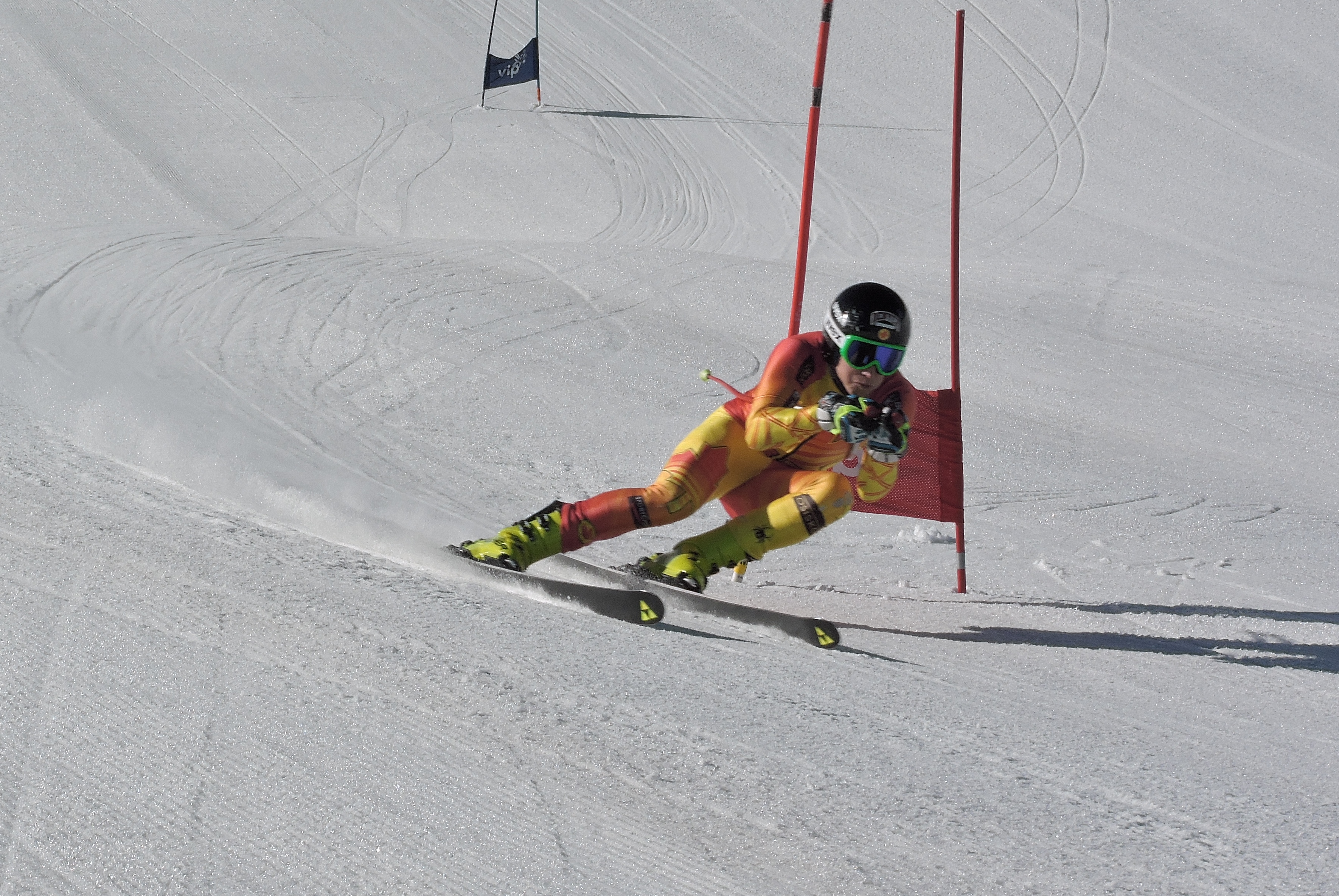
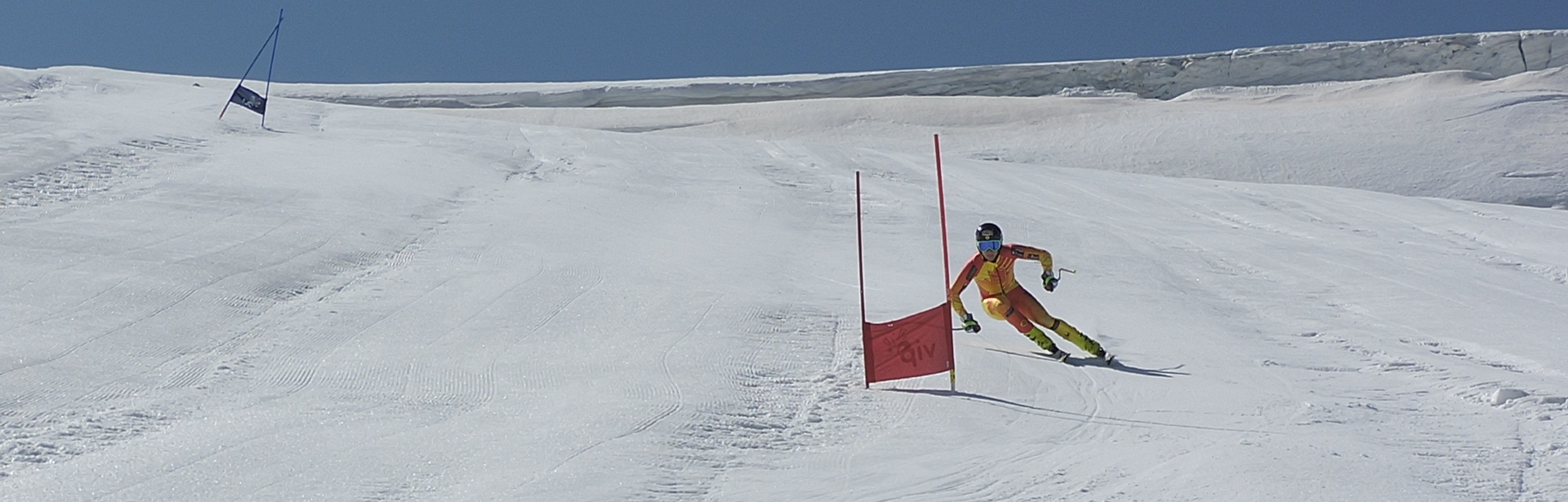
Every athlete in Team Croatia works hard (and there were athletes here from U16 right to Olympic medalists). The familiar red & white checkerboard from their National Coat of Arms on their jackets and speed suits was evident on the hill from the beginning to the end of every day. Through warm-up, to specific training sessions, to free-skiing and working on fundamentals at the end of the five-hour day on the glacier. They were on the hill early for the hard snow, and stayed late even when the summer sun had turned the slopes soft.

The culture is to be adaptable. Accept change. Learn to live with it and thrive. It’s not rocket science. Ski racing is change: soft snow, hard snow, sun, wind, rain, altitude, snow surface, downhill, slalom, giant slalom, superG, alpine combined, nations team event, parallel events – every day, every run, every moment … is change. So it’s quite logical to focus on thriving in an environment of change.

This is hard work. For everyone. It takes commitment. Real commitment. Goals are clear and with it, action. And with it, comes real results.

I’m not going any deeper into what we did on the hill, as I want to respect the privilege of being invited to train with such a dedicated group of athletes and coaches. But we all know, fundamentally, what is needed for success. It just takes an open mind, a will to question convention and a relentless commitment to excellence.

Thank you Ivo, Ante and your entire Team: athletes, coaches, service support and cook. It has been an honour. Let’s do it again soon!

——-

A shout out to those who are supporting CanuckOne.  @Fischersports @uvexsports @Leki @AlbertaAlpine @DU_Skiing

#VoteOfConfidence #ThePursuitOfExcellence #aimforthetop

DSCN1953

Posted in Uncategorized | Leave a comment

New Directions, New Attitude, New Program

Striking out on your own, outside a National Team, can be a daunting prospect in ski racing.

The cocoon of support for elite athletes, from access to Training Centres, management of programs, coaching and tech support to physios and strength trainers is intended to build excellence and compete with the best.

The irony, is every successful ski racer – no matter what country – to some degree is independent of their National Team program. Hirscher, Vonn, Guay, Cook or Gagnon have sought out individualized elements of their training program to meet their specific needs. They realize success must be tailored to meet the specific demands to compete at the highest level, so they go out and find what they need.

Some are fortunate enough to have the support of independent groups like B2Ten (a privately financed group who support select Canadian athletes) or Red Bull. Others have been forced by circumstance to seek out support – be it a training group, coaching, strength and conditioning or physio. There is a lot of independent activity by athletes in the world of ski racing.

The key lesson, is to understand success comes and is maintained by seeking out the very best program for the athlete. But you need objective and thorough evaluation of performance to determine where the gaps are … and then fill them.

Which brings us to Zermatt and our training session with Team Croatia.

When financial limitations meant we were mostly on our own for the 2015-16 season, we saw opportunity. The first step, as we could not wait until July to find out if any sort of training would be extended to ‘invitees’, was to find a high quality training group.

I’ve known Ante Kostelić, patriarch of the Croatian program since his daughter, Janica, burst onto the World Cup scene in the mid-1990’s. Several years ago, in a chance encounter at the Lake Louise World Cup, Ante had said to me “I would love to train your boys”. So, not being shy, a request went out through Ivica (whom we have gotten to know well through our mutual relationship with Fischer Skis) if we could take up the offer.

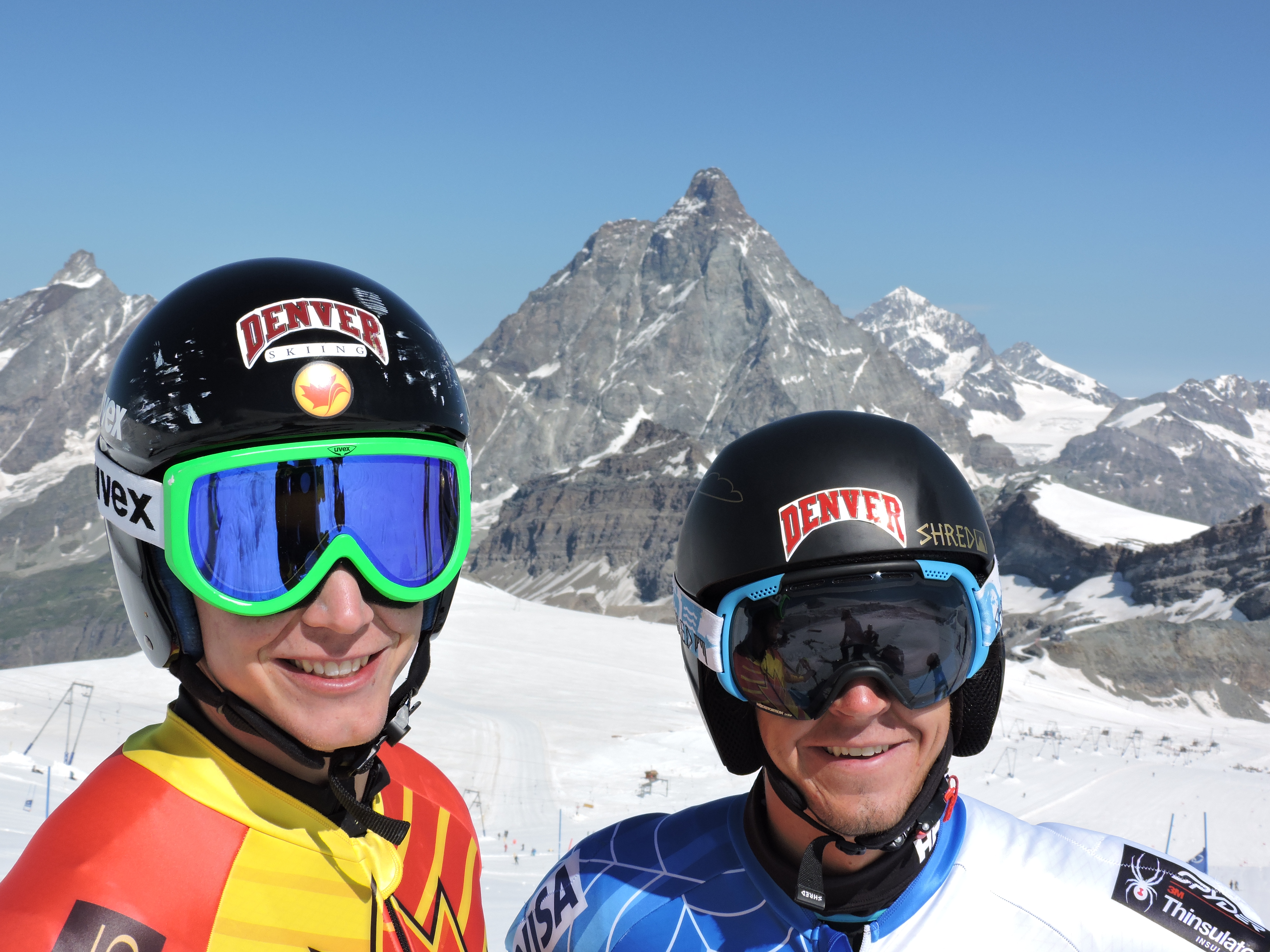
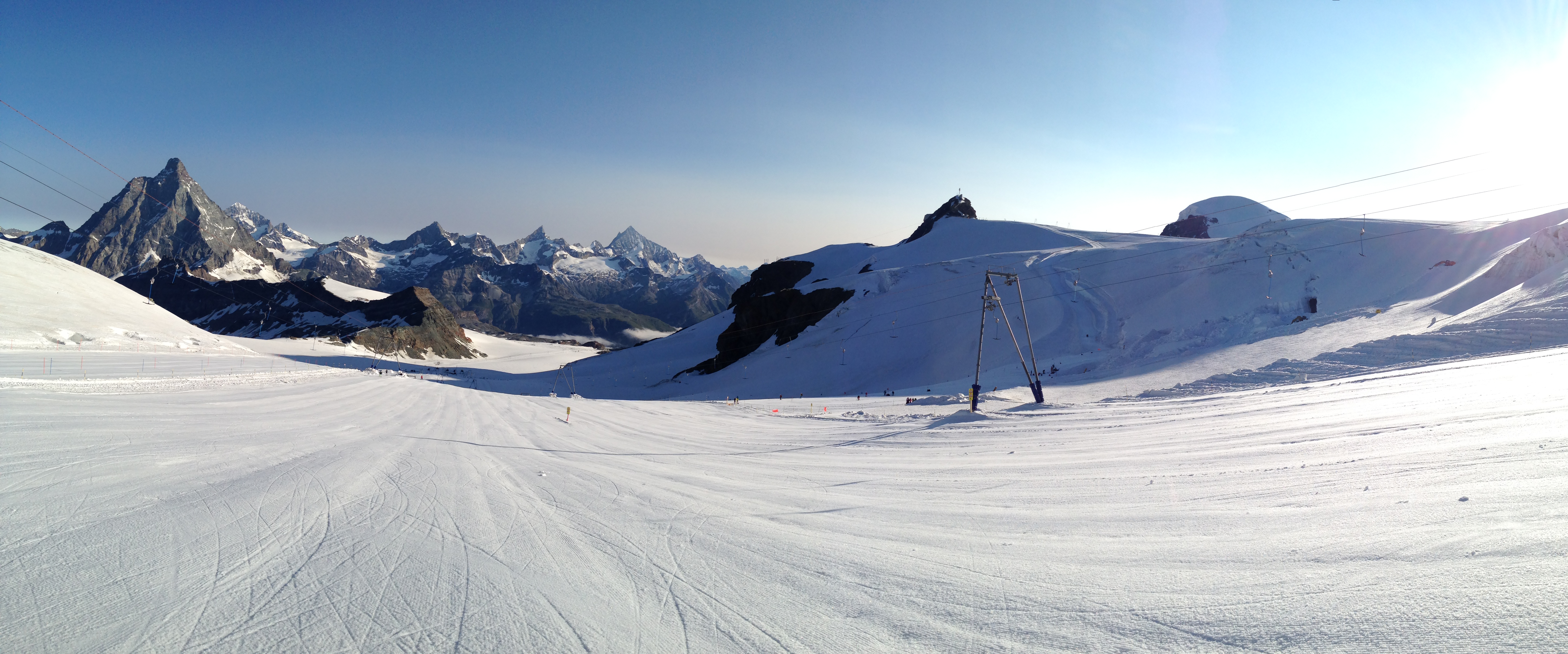
Spin forward two months, and here we are: into week two of an intense session covering superG, giant slalom and slalom on the top of Switzerland.

This is a strong training group. Beyond Ivica Kostelić (ranked 4th in the world in Alpine Combined and who would be the best known Croatian athlete), the peer group includes Matej Vidovic (ranked 90th in SL) and Filip Zubcic (26th in GS), along with two top juniors: Istok Rodes (146th in SL) and Elias Kolega (163rd in SL).

In the next lane to us is the newly formed US National University Ski Team, made up of top NCAA prospects. And on the other side, Schladming World Cup winner Alexander Khoroshilov along with Russian teammate Pavel Trikhichev (ranked 76th in both GS and SL).

For a Canadian athlete looking for honest evaluation in superG, GS and SL – and focused on learning to score top 30’s in World Cup, it’s a great opportunity. Further, with the renewed emphasis by the FIS on the Alpine Combined, who better to work with than the athlete who has dominated the event with 16 podiums, 9 wins and 3 medals over the past decade?

So filling the first gap of the new season: finding a compatible peer group to train where we could lift our competitiveness and have clear evaluation of equipment and setup – has been addressed by the generosity of the Croatian Team. And we have been made to feel very welcome.

Any insights we can share?

Stay tuned.

“Always work hard on something uncomfortably exciting.”
Google co-founder Larry Page

IMG_8512 DSCN1362

IMG_8523DSCN1341

Posted in Uncategorized | 1 Comment

The Art Of Training

DSCN0927

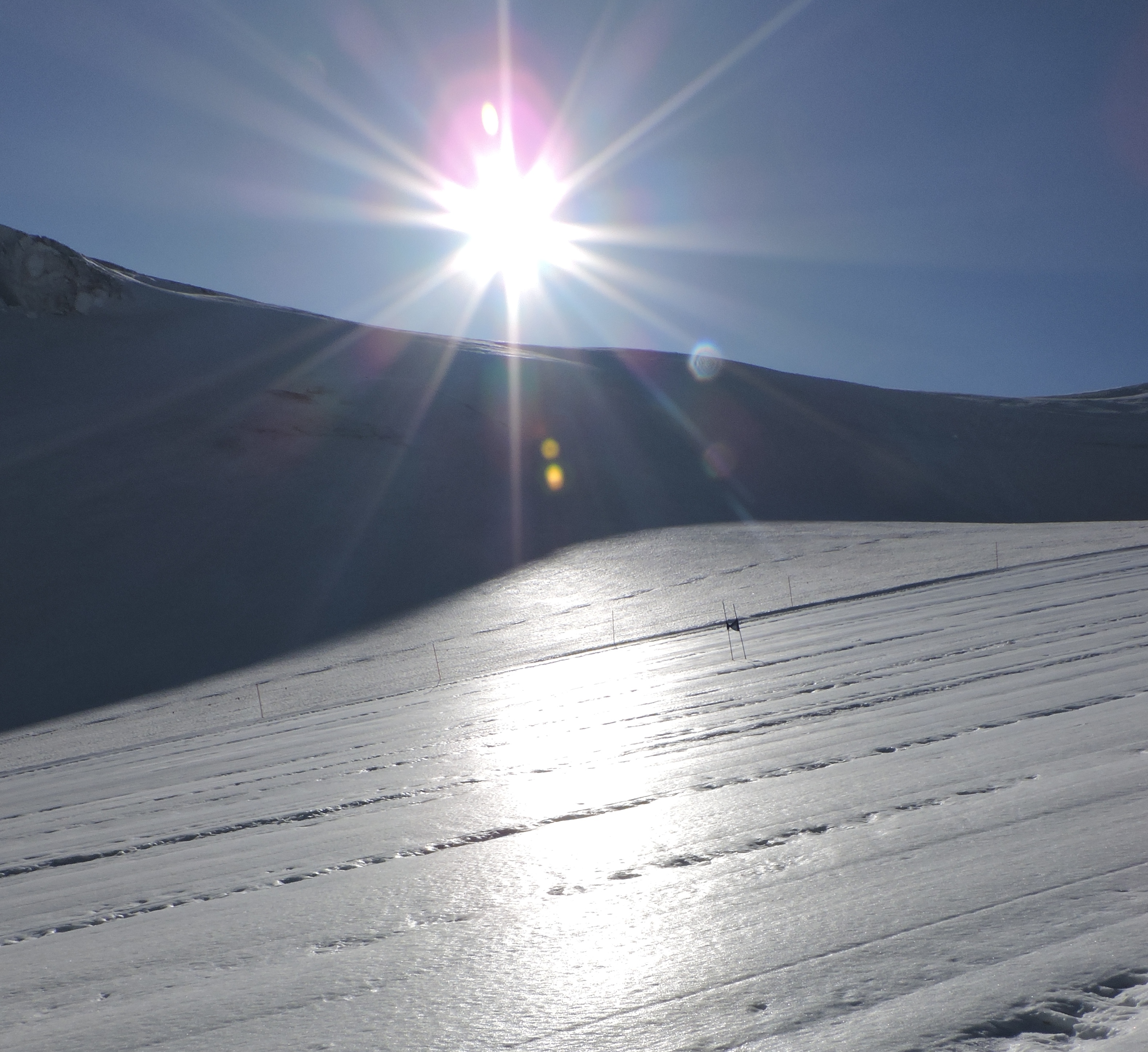
The sheen of ice promised the potential of a reasonable day of training.

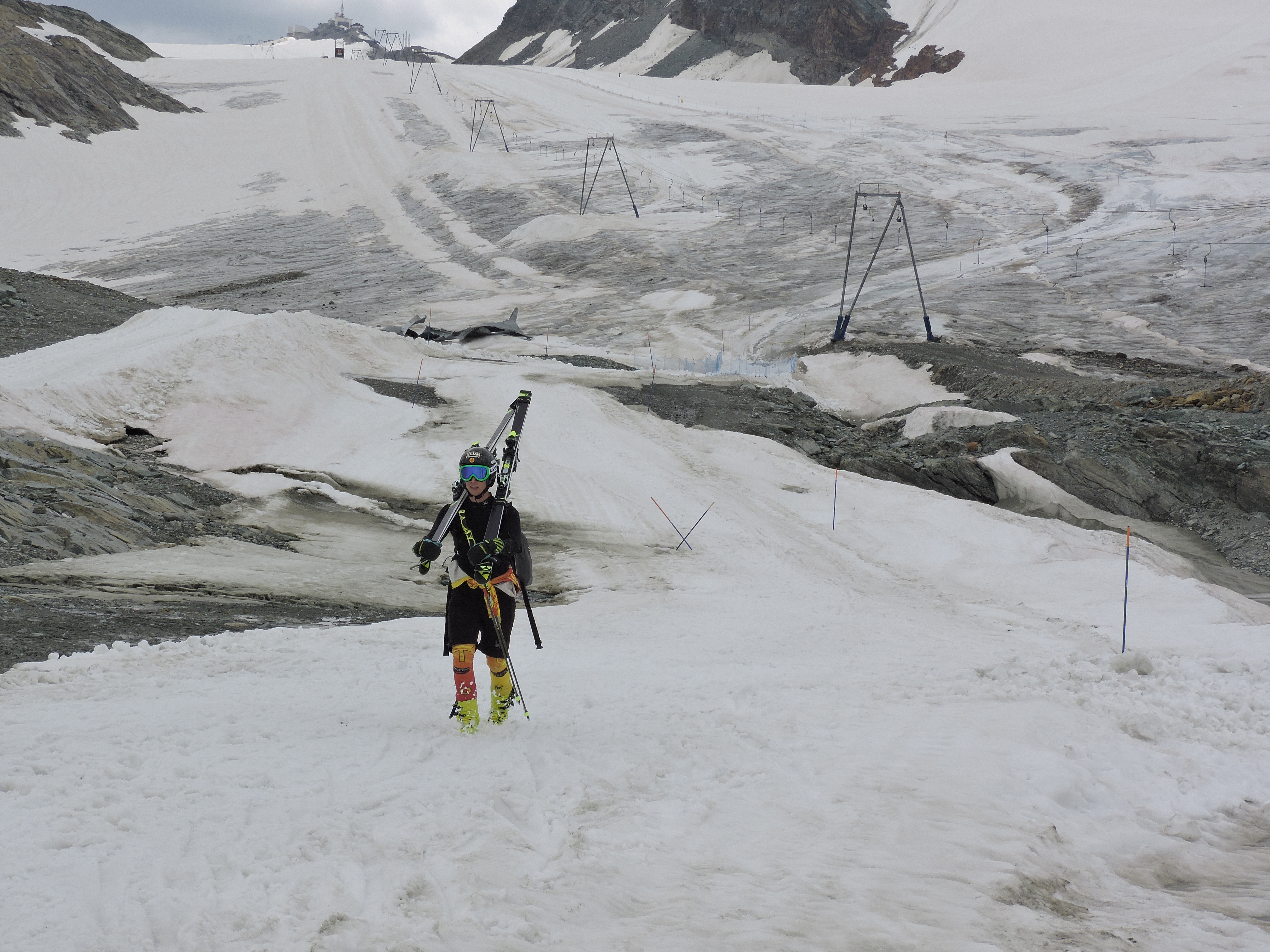
It could have been a small reward after the tedious ascent up to the Plateau Rosa, high above Zermatt. Winds had doubled the usual 45 minute ride. We were an hour late in reaching the snow.

One run gave us the answer. Even at an altitude of 3,900 metres, rain and clouds had weakened the icy grip necessary for good summer training.

One good run.

But we didn’t come here to give up when it gets tough. That one good run was followed by 6 more, pushing to bring around the 35 metre radius GS ski in mush. Every run was a rough ride. The lengthy course offered no respite. After two hours, we switched to slalom, plowing through ever softening conditions.

It was a real slog. But it was still a good day.

The rain brought relief from the extreme heat wave that had set records across the Alps. The air was finally clear. Pounding away on a tough course, while the ugliest feeling imaginable, delivered conditioning and focus.

And the real reward came this morning: granite-hard snow. Nearly unlimited visibility to one of the most beautiful alpine vistas in the world. On snow at 7:00 and the snow finally softened at 11:30. Following warm-up, two quality runs of GS, six runs of SuperG and to wrap up the session, four lengthy slalom runs.

The tough days make good ones that much sweeter.

In ski racing, it’s rare to have those epic days. Cold, wind, fog, rain, snow – we live in the elements which make our sport so challenging but also special. A constantly changing environment, which is why ugly training days are so important. We learn. We push ourselves. We dig deep and submerge the urge to pack up and go home.

DSCN1126 DSCN1206DSCN1213IMG_8469

Posted in Uncategorized | Tagged , , , , , | Leave a comment

A New Season ….

aare1

“Always work hard on something uncomfortably exciting.”
Google co-founder Larry Page

The summer solstice has passed. Slowly, for the time being, each day gets a little shorter as the march towards the best season of the year begins.

It’s time to return to the snow.

After a season which included being the only active member of the Canadian Team to ski into the top 30 in World Cup slalom, a member of the silver medalist Nations Team Event and a pair of top 30 results in the World Championships in Beaver Creek, financial limitations in the Canadian program have moved us to build our own program.

Enough about the past. This is about new beginnings.

Here and in the CanuckOne page you can follow the travels and results of one of Canada’s top male slalom ski racers, Erik Read. All we will reveal today is we are setting out for some pretty exciting adventures. Our next destinations – on Canada Day – to paraphrase the words of Alex Trebek “What are two European countries that share the same national colours of Canada?” Not a difficult question we’re sure for most.

Our immediate thanks go out to those who have already helped us in this journey:

  • Andy Leroy and the University of Denver Pioneers who provide the foundation for Erik and his NCAA teammates and coordinated some pretty cool training opportunities this spring;
  • Martin Rufner of the Canadian Alpine Ski Team for immediately making sure there has been access to the Combi Training Group at WinSport – no hesitation in saying yes – and to the crew with the Canadian Sport Institute Calgary and their continued guidance;
  • The continued encouragement from Siegi Voglreiter of Fischer, Bernd Mayer of Leki and Steffi Haenfling of UVEX;
  • Nigel Loring, Cam Stephen and the entire staff of Alberta Alpine who, without hesitation, extend critical support to the many Alberta high performance athletes in our system – AST alumnus and – who remain committed to a dream but on an alternative pathway to excellence;
  • Jim Smelie: thank you for your guidance, patience and most important – your support;
  • And to the many, many people who have shared words of encouragement in the past two months.

This is not an easy pathway. But we are ready to take it on: do what is needed – live, learn and revel in the excitement visiting new places, training with new partners.

“The relentless pursuit of excellence” is our motto. We have a vision, plan and goals and will share these in the journey. We will reflect on our sport and offer commentary – welcome or not. This, we believe, is an essential part of building a culture of excellence: how we can continuously learn, build the social network that is part of any successful sport, challenge the status quo so Canada can once again be a leader in alpine ski racing.

In our own way, perhaps we can help make a difference in the pathway for younger athletes and provide inspiration for big, bold dreams.

But enough for now. We have a plane to catch. Please stay tuned!

Posted in Uncategorized | Tagged , , , | Leave a comment