Moments in time: highlights of 2016

The past week has been a whirlwind of activity – training and testing. As preparation turns to the new season, I thought I would share two moments from the season past that left a lasting impression – for different reasons.

DSC02357.JPG

Sun Valley – 2016 US Nationals

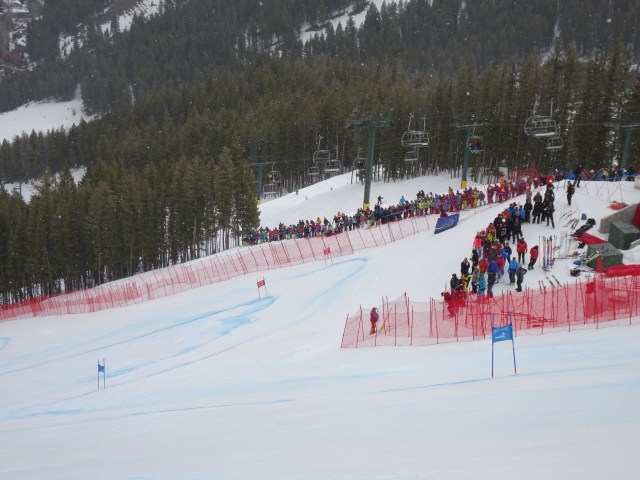
Greyhawk is one  impressive run. The entire race courses in Giant Slalom and Slalom can be taken in from the finish, as well as most of the superG. The layout of the track as it plunges directly in the fall line through varied terrain, when coupled with a snow surface typically reserved for World Cup races, makes for spectacular ski racing.

Big crowds gathered to take in the action. The atmosphere was electric.

The race of the event was the superG which used the brand-new traverse to enter Greyhawk. Watching the athletes tackle the slope made me reflect this was a race like the old days. Each athlete had their own line, dictated by a mix of experience and confidence. Some mastered the tricky terrain and speed, others found themselves catapulted off the track.

This was great ski racing. Tough and a true test of skill. Entertaining to watch every athlete. The use of tactics, too rare these days on the World Cup, was refreshing to see.

The US Nationals will make a return to Sun Valley in 2018.

Zermatt – in the shadow of the Matterhorn

IMG_8469

The impressive spike of the Matterhorn dominates the panorama when stepping out onto the Theodul Glacier at 7am. You feel on the roof of Switzerland, surrounded by 4,000 metre peaks in every direction.

But the truly impressive sight are the multitude of race lanes and athletes – young and old – attracted by the quality of snow and reliable terrain for some of the best summer training in Europe. Clubs from both Italy and Switzerland as well as many National Teams make Zermatt their summer training base.

There is no better feeling than arcing turns on fresh corduroy. The morning latte will taste that much better by the second hour over at the Refugio on the Italian side.

IMG_8598.JPG


Posted in Uncategorized | 1 Comment

Bravo Larisa. Thank you.

brave

The wise athlete knows best. Larisa Yurkiw has proved this both on and off the snow throughout her remarkable career.

This past season was Larisa’s best, finishing 3rd in the season-long World Cup downhill standings. She led the Canadian effort with three podium performances.

But knee issues surfaced again as the season wound down and a recent surgery on the knee she calls “her good one”, appeared to be the writing on the wall.

Larisa’s story is a great one. The epitome of determination, to overcome. A lesson for every single athlete.

Anyone who knows how challenging it is to podium at the highest levels in downhill appreciates what I speak of. The speed disciplines are dominated by the powerful squads from Austria, Switzerland, Italy, France and the USA for a reason:  the Team. Resources. Coaching. Eyes on the track. Teammates. Servicemen. Access to great equipment. The pool of support that goes with a strong team provides the critical resources to build success.

Larisa and her coach, Kurt Mayr, found their own way. An international collaboration between Norquay, Sweden, Germany and Team Larisa – to replicate the capacity of a big team. Teammates to provide the competitive environment and also to be your soul-mates. Coaches and eyes to line the track in training and in competition. Efficiency through combining resources between nations who could not offer a full program to individual elite athletes.

She was smart with her campaign to raise funding. She brought value to those who believed in her, whether it was a personal sponsor or donation. The “Brave Badge” concept blended her own courage to overcome with a clear message to younger athletes that they could succeed as well by “stepping outside their comfort zone.”

Some suggested Larisa needed to ‘return to the fold’ of the Canadian Team, to help the next generation. But since 2010 and in  particular the past two years, she’s been competing at a level no other Canadian female was close to. Canada’s number two athlete, Valerie Grenier, is a very promising talent, but has yet to score a result in the top 30 of a World Cup in this event. She only has four World Cup downhill starts.

Larisa was at an entirely different level. Third best in the world.

She proved that a dream combined with determined effort can be successful. These are skills that will serve her well as she moves to new pursuits. In fact, don’t be surprised to find Larisa Yurkiw in a leadership role in sport in the not too distant future.

Thank you, Larisa. For showing us all that individual initiative still shapes athletic outcomes. For not giving up when your team disappeared around you. For staying the course when the outlook was bleak from your injuries and embarking on the pathway to independent status. For being gracious when you proved the doubters wrong, reaching the podium and being named to the 2014 Olympic Team. For your podium this winter on the Orieller-Killy piste in Val d’Isere, France (a personal favourite on mine).

Behind every champion, there is the support team and those who quietly lend their support. Like pretty much every successful athlete, family is crucial. To her parents Lynda Montgomery and Denis Yurkiw and her two brothers Harrison and Mitchell. Well done. You believed and supported Larisa unconditionally.

One year ago, when Larisa was renamed to the Canadian Alpine Ski Team, she wrote a post explaining why she would continue on the independent pathway. In her own words, here is what I think the persona of Larisa Yurkiw has come to mean to all Canadians:

‘Thank you’ is always in order.. to the girls who wrote to me on facebook explaining their goals and asking how to get there, to the women who managed a happy heart over the holidays despite a cancer diagnosis and to the men who cry when telling me their own stories of hurt and heart.  It’s been a beautiful ride and I’m so grateful for the support that allows me to continue this journey… I have loved being an ambassador for trying really hard and looking defeat right in the face.
Here’s to what Team Larisa has come to represent… 
Posted in 2016Sochi, Investing in athletes, Olympic sport, Ski Racing, Uncategorized | Tagged , , , , , , , , , | 1 Comment

Investing in a dream

In the Olympic world, there is financial success for a fortunate few. But the ‘average’ Olympic athlete is in it for the right reasons. They’re not going to get rich. Or famous.

Like any professional, an Olympic athlete wants to make the best of their skill. If they can earn a living along the way or build a platform to launch a post-athletic career, great. But pared down to the bare essentials, an Olympic athlete wants to be the best at their chosen sport.

Yes, most top-ranked athletes have their coaching, travel and high-performance preparation expenses covered, But without additional support, otherwise known as sponsors, room and board day-in and day-out is covered by the biggest “real” sponsor of Olympic sport: The Bank of Mom and Dad.

There are ways to find support and this is a pitch to the corporate community to recognize the critical of diversity of sport – why it is important to look beyond the high profile – and how such an investment can bring tremendous satisfaction.

The ‘headgear sponsor’ has become quite pervasive across most Olympic sports and the best way for a corporate sponsor to lend a hand. This is the space on the helmet or toque of the athlete is theirs to sell to the highest bidder. A limited number of athletes can command a reasonable fee to augment their income. But for most, this financial investment is a modest supplement to help fuel a dream.

But that modest supplement can make a world of difference.

A basic headgear sponsorship for the “average” athlete might be $1,000 a month or $12,000 a year. In return for the logo of the corporation on their forehead, the athlete might be expected to write a short column in the quarterly employee newsletter and attend the annual general meeting or an employee function. Now $1,000 a month might not sound like much and is nowhere near those pro athletes, but at least dependence on parents is somewhat reduced.

Think of the number of businesses that could ‘afford’ to invest $1,000 a month into some of the best role models in the country? That’s the equivalent of those intrusive pop-ups in web traffic, one ad page in a major daily or one 30-second ad spot on the national news.

Or think of it this way: can we afford not to invest in our best and brightest?

Or think of it this way: can we afford not to invest in our best and brightest?

There are many ways to support Olympic athletes. Some good projects I’ve observed are intended to educate the athlete while bringing value back to the sponsor such as motivational speeches or attending corporate events – where the athlete is mentored while sharing their personal experience and building a relationship with employees. Another tactic might be supporting a personal blog where the athlete outlines their journey. Or link the athlete to the community support initiatives. It’s a wide-open field that welcomes creative ideas.

And it’s an investment that can go on giving. Community: the altruistic warmth of supporting a young athlete who is pursuing a dream. Building our future: developing role models. Business development: tangible ways to motivate employees within a company. There are a host of ways to creatively build value in a relationship. Done well, it can be fun, inspiring and darn good for the bottom line.

The importance of investing now in our 2018 prospects, is the need to keep our best and brightest motivated to stay in sport. It isn’t the money that maintains that grip on their passion. It’s the motivation of the Olympics, the World Championships and World Cup. To represent your country. To be the best in the world.

The symbolism of investment by corporations in a dream has far greater impact than most people realize. Choosing to support an athlete is recognition. A subtle endorsement of the sweat that stings the eyes on a hot summer day while doing wind-sprints, freezing toes while riding one more time up the lift for another training run in November, or calming nerves while moving into the start gate for the moment of truth.

These are the real athletes. No strikes, no arbitration and no multi-million dollar payouts.

Our Olympic athletes don’t play to be the best on the team or in the league. They play to be the best in the world. In two years, many stories will be written about how their efforts inspire the nation, strengthening the bonds that tie us together.

Our future prospects are worth every penny invested in their dream.

Posted in Investing in athletes, Olympic sport, Uncategorized | Tagged , , , | 1 Comment

Lessons from the snow: objective review

simple-gap-analysis

It may be one of the most misunderstood concepts in sport.

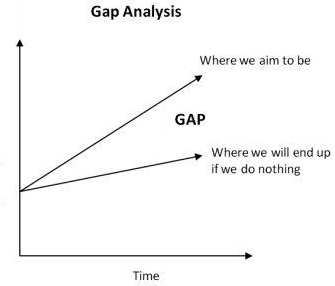
Gap analysis is a critical tool to deeply evaluate and improve performance. It’s the final wrap-up of each competitive season and the starting point of a new one. The time to reflect, adjust and implement.

This was our new approach in the season past: to take stock of the season past and reflect objectively on performance. To identify any gaps in preparation, support, equipment, fitness, culture or frame of mind. Determine how to close the gap through new approaches, raising the bar or new partnerships – and set the new plan in motion.

Why is gap analysis misunderstood? The key word is objective. Proper gap analysis is a review of performance to make it better. A very personal, thorough evaluation of how the season went, with an eye towards identifying what went right, what went sideways, what may have been missing … and how to fix it.

It is not a witch-hunt or a negative evaluation intended to find fault. Too often the deep look at the past season spirals into the negative, assigning blame to others. The effective review is the best chance to self-assess to close performance gaps, not widen them.

So what thoughts can we share for a thorough gap analysis?

Write it down. Keep a record of what worked and what did not. With your thoughts on paper, at any time you can go back and review if you’re on track. Fine-tune goals. Update progress and make adjustments. If it’s all in your head, how can you be sure? Keeping even basic self-evaluation keeps the record clear for reflection a year from now.

Set out short and long term goals. The short term is next season, the long term aspirational:  where you want your career to go.

Getting personal is essential. This is “look in the mirror time’. Honesty is paramount. You can be the most objective person about your performance. Did you meet your goals? If yes, then write down what worked – and how you might to it better or more efficiently. If not, what were the gaps – moving through all the key performance metrics: fitness, technique, equipment, attitude, finances and culture.

While the foundation of gap analysis is objective (definition: not influenced by personal feelings or opinions in considering and representing facts), the art is layering your own feelings about influencing your performance in the coming year to find solutions. You can be the master of your destiny.

Think the top athletes rely on the coaches, service men, athletic and medical staff to deliver all their needs, their program? Think again. The common denominator across all successful athletes is recognition a program can provide a solid foundation but individual initiative drives the minutiae of success. The successful athlete goes the extra mile of self-examination and sourcing solutions. Don’t be afraid to reach outside your team or your comfort zone to seek ways to close any gap.

Always start with what worked, because it sets a positive framework. These are the things you want to continue to do – but don’t get caught in a trap that “more is better”. Be sure to critically evaluate that what is working is moving you towards your goals. Then evaluate your performance, considering what you may have been able to do better or what may have been missing. Running out of gas in the final gates? Second run performance not as strong as first run, or vice-versa? A nagging worry equipment is not quite aligned or meeting your needs? Keep it personal. This step is about you. About identifying the gaps. Dealing with circumstances you can change.
.
A thorough review goes beyond to include those close to your performance. First and foremost would be your coach, but don’t be afraid to include parents or any others who know you well. This is your support environment. Bouncing ideas or ways to improve your performance off your support team demonstrates you are thinking critically about your career. But maintaining objectivity is paramount. Respect the sphere of influence (parents, respect the expertise of the coach; coaches, respect the personal insight of the parents).

.

Think like a champion. I’ve had the good fortune to spend quite a bit of time around World Champions and in my view they all share common traits. They constantly evaluate. Continuous improvement is a daily goal. Nothing is “good enough”. They are dedicated and relentless – on the snow, in fitness activity and in having fun. No stone is left unturned. They can be exhausting in pursuing performance, but considering their lofty goals this is a character asset to be admired.


Posted in Ski Racing, Uncategorized | Tagged , , , , , | Leave a comment

Georgia Burgess and Jamie Casselman Named Recipients of 2016 Read Scholarships

April 21, 2016
Outstanding Ski Racing Talents Recognized For Results in 2016 Season 

For 28 years Alberta Alpine has been recognizing athletic excellence through the Dee Read and Ken Read Scholarships, awarded to top ranked femaWC Team Canada Jamie Casselmanle and male athletes who combine a love of skiing with outstanding competition results.

The 2016 recipients of the two $1,500 scholarships are Georgia Burgess (Banff Alpine Racers Ski Club) and Jamie Casselman (Team Panorama).

The 2015-16 season will be one to remember for 16-year old Jamie Casselman. The Team Panorama athlete earned the privilege of representing Canada in the Longines Future Champions event (which featured one U16 athlete from each country that hosts a World Cup event) at the FIS World Cup Finals as well as racing in the prestigious Topolino ski races in Folgaria, Italy. He capped his season with three gold medals and overall U16 Champion in the western Canada Can-Am Championship and then went on to take silver and bronze in leading Team Canada at the annual Whistler Cup International races. Next season Jamie will move to the FIS level of competition, competing in the U18 category.

Georgia Burgess represented the Alberta Ski Team with distinction in Nor-Am and FIS competition. The season highlights for the 18-year old CalgaAST_2015_GBry native included a 4th place in the downhill at the Canadian Championships and 10 Nor-Am point results. Georgia is one of the leading young talents in the speed events of downhill and super G, with her focus to become a student-athlete competing with an NCAA Ski Team and then to represent Canada in the Olympic Winter Games.

“Georgia and Jamie represent a bright future for ski racing in Alberta and Canada” said Canadian Olympian, Ken Read. “The level of commitment to be successful requires enormous dedication from the athletes, parents, ski clubs, coaches and the province. We’re very pleased to be able to help financially, to keep motivation and enthusiasm for skiing high and the focus on aiming to become a member of the Canadian Team.”

Alberta Alpine offers a number of athletic scholarships to athletes on an annual basis, to assist athletes and their families. “We want to retain our athletes and give them the best possible program to be successful,” said Alberta Alpine CEO, Nigel Loring. “Alberta has produced many internationally successful athletes and it is our objective to be a leader in putting Alberta athletes onto the Canadian Team and to achieve podium success on the world stage.”

About the Dee Read Scholarship

The Read Scholarships were established in 1989 and are dedicated to supporting young athletes who show both a passion for the sport and who aspire to represent Canada at the highest level. Dee Read was a life-long advocate for the sport of alpine ski racing, one of the first female international officials world-wide and passionate about skiing in the Canadian Rockies. Dee Read’s dedication reached far beyond her family to influence thousands of athletes, parents, coaches and sport administrators who benefitted from her knowledge, generosity and warm spirit in lending a firm but insightful hand as a sport leader in Alberta and Canada in the 1970’s and 80’s as we built a reputation as one of the leading ski racing nations.

Below left to right: Jamie Casselman, Georgia Burgess

Georgia B Whistler Spring Series cr Susan Holm1 Jamie Casselman U16 Feb 1 2015 Lake Louise Malcolm Carmichael


Posted in Uncategorized | Leave a comment

Courageous, but not so unusual anymore

Hig_Roberts
(Updated Apr. 20) In early January, The Denver Post profiled US Ski Team athlete Hig Roberts after his World Cup debut in Soelden, Austria.

It was a pretty typical move into the big leagues. Hig earned four starts and didn’t make the flip in any of them. Even starting from #45 in giant slalom and slalom, while possible to earn that coveted 2nd run, for most it just takes time. Most newcomers gain experience, observe the Tour and learn to get comfortable with the new environment.

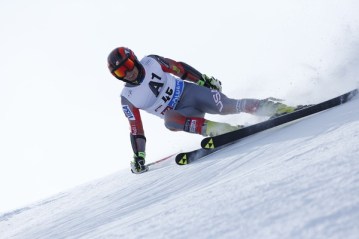
What was unusual for Hig, was his age. At 24, he was a World Cup rookie. Equally unusual, but becoming less so, is the fact he has a degree from Middlebury College having spent the last four years working his way through classes and NCAA ski racing. Hig wrapped up his college experience and earned his place on the US Ski Team by virtue of his strong performance in the Australia-New Zealand Cup races in the summer of 2014 and Nor-Am Cup Tour last winter.

To choose the student-athlete pathway when still harboring the goal of representing your country is a courageous choice. It’s not easy to balance ski racing and the books, so to speak.

To be clear, the student-athlete pathway to the World Cup is not for everyone. Most athletes who choose to join an NCAA program are keen to be able to continue racing, with the primary goal of completing an undergraduate degree. The World Cup is not on their radar.

But this is a very important cohort for our sport. They fill out the ranks of the Nor-Am Tour, raising the level of competitiveness, deepening the point profile and providing leadership to younger athletes who may be aiming for glory on their National Team or preparing for their own move into the NCAA world. Just imagine what the Nor-Am would be without NCAA athletes.

A small group keep the World Cup target firmly in mind. This past winter  grand total of three active NCAA athletes raced in World Cup races. Several other athletes manage their education while attending school either because of injury or in the spring quarter – and fit in competition.

The larger group has wrapped up their degree and NCAA eligibility. They’ve returned to their National Teams with 100% focus on ski racing as their profession: Espen Lysdal, Leif -Kristian Haugen, Trevor Philp (Denver) , Jonathan Nordbotten, Tim Kelly, Robbie Kelly (Vermont), David Chodousky (Dartmouth), Hig Roberts (Middlebury),Mark Engel (Utah) and Joonas Rasanen (New Mexico). They will be joined by new graduates Kristine Haugen (Denver) and Kristina Riis-Johannessen (Vermont).

The student-athlete pathway is not limited to North American schools. Take a look at the results of the 2015 Universiade and several prominent names jump out: Ramon Zenhaeusern (Switzerland – 7th in Wengen SL) and Robin Buffet (France – 2016 Europacup SL champion).

The path of a student-athlete is courageous. But as a very positive development for ski racing in North America, not so unusual anymore.

http://www.denverpost.com/wintersports/ci_29358384/steamboat-racer-takes-unusual-path-u-s-ski


Posted in NCAA Alpine Ski Racing, Ski Racing, Uncategorized | Tagged , , , , , , | Leave a comment

A journey continues ….

2016NorAmFinals3

Nearly a year ago we started on an independent pathway in the world of ski racing. In a sport where the tradition of “Team” runs deep, to embark on this new journey was intimidating to say the least.

Several weeks later on an early July morning, we were at 3,900 metres with a crystal-clear sky surrounded by the Swiss Alps, dominated by the jagged peak of the Matterhorn. The snow was rock-hard corduroy. Below, the few coaches that had beaten us out to the slope were busy setting up their training lanes. The wind was calm and overnight temperatures had set the glacier snow for a great day of training.

How could one not be excited?

And thankful. Throughout this past season we have worked with so many who have been generous with their time, expertise, resources, enthusiasm  and support.

No pathway is ever “independent” in ski racing. A strong peer group can lift your performance and spirits. Good training always requires support of coaches: logistics, setup, on-hill and safety. There is always the ‘team behind the team’ of ski service and athletic support. Competitive peers bring honest competition, camaraderie – to work together, suffer together and live the journey together. And the precious support of friends and family builds confidence and sustainability.

The foundation of this past season has been the DU Pioneers: the University of Denver Ski Team – and their NCAA program of excellence. In the words of DU alumni Otto Tschudi “leading edge education and athletics works!” With a primary focus to be a leading school in NCAA competition, the coaches and alumni support go the extra mile to make World Cup and Nor-Am options work for their student-athletes. This approach has enabled a growing list of graduates to be part of their respective National Teams in World Cup races. The Lauberhorn slalom in Wengen this winter featured five current and alumni DU athletes, with four qualifying for the to-30 and going on to score World Cup points.
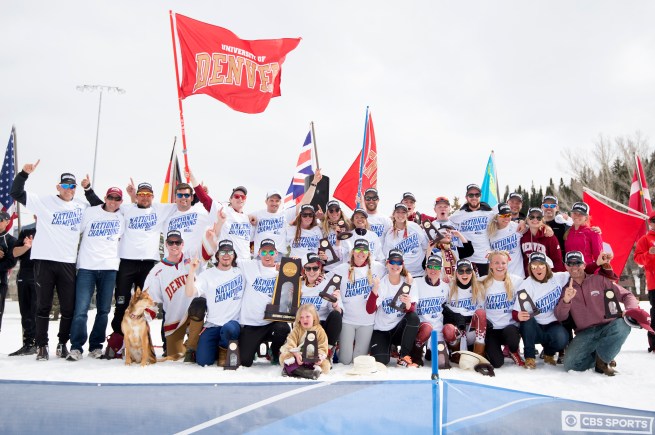
2016 NCAA Division I Skiing Championship

12 MAR 2016: The University of Denver celebrates their victory during NCAA Division I Skiing Championships in Steamboat Springs, CO. Jamie Schwaberow/NCAA Photos

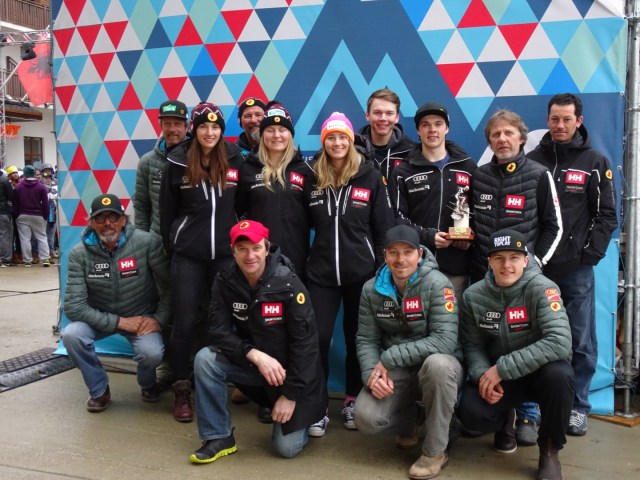
Andy Leroy, Tyler Shepard, Joe Swensson and the entire DU Team work hard to provide a quality training and competition environment. The results bear this out: 2016 NCAA National Champions in skiing (DU’s 23rd National Title), two NCAA champions (ladies GS and men’s slalom) and multiple podiums on the Nor-Am Tour.

The early days of our journey – those early mornings in Zermatt – started with a friend who offered to help. Ivica Kostelić and the entire Croatian Ski Team welcomed us into their world at a time when a vote of confidence was sorely needed. To train alongside a World Champion, to see first hand the philosophies that continue to produce successful ski racers, was a privilege. Ivica may be in the twilight of his incredible career, but his work ethic and determination have not diminished. Within their team, Filip Zubcic remains a top-30 GS athlete and Team Croatia took gold and bronze in the men’s slalom at the 2016 Junior World Ski Championships. Head coach Ante  Kostelić and his entire staff stepped up and gave us a great training environment.

The balance of the summer months saw many who were incredibly generous with their time, support and goodwill: Florian Jagodic and Marjan Cernigoj of Team Flo;  Guenther Birgmann and his Team at TCRA; Nils Coberger and Team New Zealand; Fiona & William Stevens in Queenstown and Gabi & Tim Robertson in Thredbo.

Our Provincial Sport Associations (PSO’s) play a critical role in the athlete development pathway of young talent. When an athlete moves beyond the Provincial Ski Team, all the PSO’s continue to play a key role – welcoming NCAA athletes into training groups as a positive resource to mentor their current  Ski Teams and deepen the quality of races in addition to the ongoing (and very important) mechanics of race entries, transporting of equipment. They understand retaining athletes in our sport is a good thing. Alberta Alpine and all the Alberta Ski Team coaches have stepped up to provide this training environment and logistical support – seamlessly, and efficiently – for us and many other Alberta athletes competing in NCAA. Thank you Nigel Loring, Cam Stephen and your team of coaches.

The foundation in our sport is always the ski club. This is an athletes “home”, where ski racing careers start and it remains the core ‘family’ that is always there. We are so fortunate to have the backing of the Banff Alpine Racers – Pete Bosinger and Luke Patterson – along with a hugely supportive home mountain: Banff Mount Norquay and Andre Quenneville – all who have gone the extra mile several times for ski testing, early morning training sessions and quality training opportunities. A full welcome to train at any time.

Transitioning in and out of World Cup is not easy. The coaches and support team of the Canadian Ski Team World Cup Combi Group have been great. Welcoming and supportive, which has made each foray into the highest level a step forward. Thanks to Paolo Deflorian, Richard Jagger & Team for continuing to believe and to invest their expertise to make it happen. To receive carding support through Alpine Canada, access to train off-snow with the Team and support of so many at Canadian Sport Institute Calgary was a privilege that was appreciated.

This year it was awesome to experience how passionate so many people are about our sport. Their desire to help our athletes be successful is nothing short of … inspiring. The support is always there. It’s in our DNA. It’s deeply embedded in the culture of the Canadian ski family – right across the country.

Our goal was to approach this season differently. Start with an objective review of past seasons. Use this experience to develop an individualized program that would build a strong platform on and off the snow. Set clear performance goals. Build appropriate intensity at the right time. Gaps were identified with considerable thought put into ways to address them. We assembled an integrated support team of key individuals, so a special word of thanks to Dr. Jim Taylor and Louise Vien.

The generosity of so many who have expressed their support in wide variety of ways instilled both confidence and a sense of mission. We are very grateful for the continued generous support of partners from the ski industry: Fischer, Leki and UVEX. All are passionate supporters who want to see athletes succeed on the world stage.

And most important of all has been the bedrock of support from family and close friends. We cannot say thank you enough for your support and confidence.

There have been highs and lows. That, is the nature of sport.

The bar always moves higher every year. We’ve faced plenty of unexpected hurdles, but they are just that: bumps in the road. Work hard, find solutions and overcome them. Be patient. Focus on the right stuff. Remember why you are out on the hill. Look about you, revel in the glory of the ski racing environment of mountains, snow and the thrill of competition.

This is a long road. There are many more chapters to be written in this journey. We are coming to the end of another season in our extraordinary sport. It’s a brutal sport. Arguably the toughest and most competitive in the winter sport world. And that’s why we love it. We do not shy away from tough, from difficult. We embrace it. Challenge it. Seek to overcome it, because it is tough.

So when you have that moment where the wind is calm, the air is clear, the mountains or hills are etched sharply against that blue sky and white snow – be it on a training slope on a riverbank, on a glacier in Switzerland, a race in the Andes or Rockies – anywhere in our ski racing world – drink it in.

We are all so fortunate to call skiing our sport, ski racing our family.
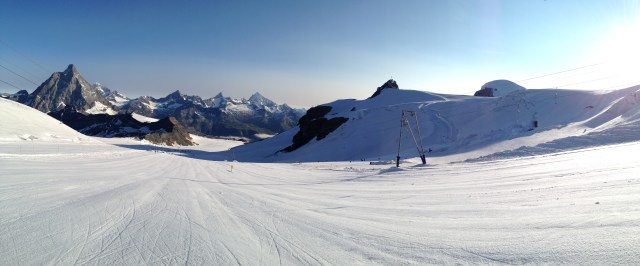
IMG_8469

Posted in NCAA Alpine Ski Racing, Ski Racing | Tagged , , , , , , | Leave a comment

World Juniors Update: Tough sport, tougher athletes

IMG_1234

It was the final day: slalom events for both men and ladies and the race to the wire for the Marc Hodler Trophy to crown the leading junior ski nation for 2016.

If only the weather forecast could have given us a break. The athletes faced every curve: pounding rain, fog, heavy wet snow, pellets and a challenging snow surface that made it a rodeo ride to the finish.

The conditions were tough. The ladies race started in heavy snow which slowly deteriorated as the run progressed to the point where it was nearly impossible to see the athletes on the track. The first several men faced the same and then the snowfall eased off slightly. Ironically, the weather cleared between runs before closing in again just as the second runs got underway.

Everyone just sucked it up and did their best. Athletes, coaches, the race crew – it was a real challenge, but not all that different that conditions the World Cup athletes were facing today in Kranjska Gora or Jasna. These athletes are attending the World Juniors to learn what it is like to ski race at the highest level – and sometimes conditions are brutal. You learn to face adversity and show your best.

The 2016 FIS Alpine Junior World Ski Championships are now in the record book. Our hosts welcomed us to Rosa Khutor with good humour, hard work and a visible pride in hosting the best young athletes in the world. We had more sun than bad weather. They met the challenge of warm temperatures and did their best to provide good competition slopes. Every race was televised live. It did take a few days to sort out live timing, but eventually it was in-place. Pageantry was at the level of any major event. The infrastructure of 2014 was put to good use.

The home team had their moments. Perhaps most memorable was in the Nations Team Event where Russia faced the powerful Austrians. Course workers and the crowd raucously voiced their approval when the first two races went to Russia, and visible disappointment when their athletes came up short in the second two – and to lose by only .02 resulted in an audible moan and then cheering for their team. They cheered on their athletes when on slope. These are a proud people. They wanted to show off their mountain and their expertise. Спасибо (“spa-see-ba”) – Thank-You.

Austria returned to the top spot, taking the Marc Hodler Trophy with 97 points, over Switzerland with 88. Canada had a best ever placing, finishing 3rd with 58 points.

On a personal level, it was pretty cool to watch to young Croatian athletes ski with poise and maturity. We had the pleasure of training with the Croatian Ski Team this July in Zermatt and got to know the athletes and coaches including their top juniors Istok Rodes, who took gold and Elias Kolega who captured the bronze.

Jack Crawford closed out a stellar Championship, taking 5th in the slalom. Ali Nullmeyer showed poise to ski to 10th, which was 3rd place in the U18 rankings.

Canada’s 3rd place was a team effort by every athlete. Crawford and Grenier were the anchors – Grenier with her dominance of the speed with gold and silver; Crawford with his consistent performances along with his silver medal in superG. Brodie Seger posted eighth in the GS and sold results in speed. The Nations Cup Team of Crawford, Grenier, Nullmeyer and Jeff Read placed 7th. Nullmeyer’s 10th in slalom. Mikela Tommy was well positioned for a potential medal in GS, but was a victim of the rough conditions in her first race since January. Stefanie Fleckenstein was solid in speed and showed real grit in the tech events. Unfortunately Alexa Dlouhy was unable to travel to Sochi due to school commitments, or Canada would have been bolstered in the slalom.

Without question, this was a tough World Juniors. But alpine ski racing is tough – perhaps the most brutal winter sport. But that’s why we love it: it is not easy, it is incredibly competitive and it molds our athletes into leaders. We prepare for the next level up – the World Cup – by meeting the challenge head on. Gaining experience, becoming comfortable with a higher level of intensity, familiarizing with the athletes – to raise the bar and show our mettle.

That is how we build champions.

IMG_1244


IMG_1233

Posted in 2016Sochi, Ski Racing, Uncategorized, World Juniors | Tagged , , , , , , | Leave a comment

World Juniors Update: 15 Gates to Glory

IMG_1231

We’re an outdoor sport, so adapting to the weather is a constant. Today was no exception. The day dawned to pouring rain, but the forecast was actually promising – with sun predicted for 9:00am. So the planned program to run both slaloms proceeded.

On cue, the sun emerged and it was a glorious day – except the upper slopes of Rosa Khutor were inaccessible due to extreme avalanche hazard. So – no slaloms were possible.

With a quick “U-turn” the program was changed to the Nations Team Event (NTE), slated to get underway in the afternoon.

This was the fourth staging of the Team Event at the World Juniors and similar to all others, it was an exciting, raucous affair. Team chants. Enthusiastic crowds. Thrilling matches. Excited athletes and coaches. Ski racing at its best.

Under blue-bird skies 16 nations took to the 15 gate dual slalom for exciting head-to-head action.  In the first round France, Germany and the USA were early exits. Round two saw Norway eliminate Canada by .10, Austria narrowly eliminated our hosts Russia in a timing decision, Slovenia handily beat Italy and Sweden tossed Switzerland.

The semi-finals were equally close with Slovenia skiing superbly and Sweden demonstrating solid skiing to move into the gold medal round. The ‘small final’ saw Norway edge Austria. And the ‘big final’ came down to a 2:2 draw but Slovenia prevailed to take gold.

This was such a great presentation of our sport. Live TV, an excited and knowledgeable announcer, big crowd at the mid-mountain deck and in the stands. Teams showing their best in the sprint dual slalom. Superb skiing, crashes, tight finishes (Austria eliminated Russia by .02) and all against a beautiful backdrop of the peaks of the Western Caucuses with a fresh blanket of new snow.

We need to do more parallel or dual events. There’s just too much fun and excitement – it brings out the best in our sport.


Posted in 2016Sochi, Ski Racing, Uncategorized, World Juniors | Tagged , , , , , , | Leave a comment

World Juniors Update: That, was tough.

IMG_1219

More than 50% of the field failed to navigate through one, tough day of ski racing.

It was the men’s turn to open the tech events with the giant slalom and the continuing warm weather impacted on the steep “Russian Trampoline” pitch making it a springboard for many early exits from the race.

The upper part of the giant slalom is steep and unrelenting. It was impossible to build a smooth surface, so athleticism on the skis was a crucial asset. After 20 or so turns the slope transitions to rolling much flatter terrain and as is typical in Europe, the sets have offset requiring the athlete to keep moving through the turn. It was unrelenting right to the finish.

In the first run the early start numbers made good use of the somewhat smoother slope – there were still plenty of spectacular recoveries. But then the course began to deteriorate and survival was the game.

The spring-like snow has been worked over with salt. It’s a good thing this was the last race on the hill. The snow is done.

Results for today’s race: http://data.fis-ski.com/dynamic/results.html?sector=AL&raceid=83022

Action now moves to the upper slopes for the two slalom races that will now take place on the upper portion of the speed track. The move from the original slalom hill is a consequence the weather and the view that we could have a very high attrition rate. The slalom leg of the alpine combined had to be reset three times to fit in the minimum number of gates – because the hill was so steep.

Both slaloms will be held Friday in the hopes we can get them done before the rain begins. The Nations Team Event is slated for Saturday, the last day of the 2016 Championship.

There is a tight battle for the prestigious Marc Hodler Cup, recognizing the leading junior nation. Austrian and Switzerland are tied with 73 points. Canada now sits 3rd (47), followed closely by Slovenia (46) and France (45). The US is 6th (33). Defending champion Norway is currently 8th (24).

Here is a link to the full standings: http://data.fis-ski.com/dynamic/marc-hodler-trophy.html?seasoncode=2016&sectorcode=AL

IMG_1218


Posted in 2016Sochi, Ski Racing, Uncategorized, World Juniors | Tagged , , , , | Leave a comment